Going Home for the New Year
2020 was destined to be an unusual year. No matter where you were, there was no getting around those four words: COVID-19.
At the time, my wife and I were getting ready to return to Shaanxi for the Lunar New Year. Right before we left, I saw news reports about a virus outbreak in Wuhan that sounded a lot like SARS in 2003. Our train route to Shaanxi happened to pass through Wuhan, so Xiao Ma said we should at least buy some masks just in case. Back then, masks were not yet hard to find, so before leaving Shenzhen we simply went to a nearby pharmacy and bought two packs.
Then we boarded the high-speed train to Xi'an.
On the train, I kept scrolling through Weibo and the news, and it quickly became clear that the virus was far more serious than we had first imagined. When the train reached Wuhan Station, we put on our masks and kept them on for the rest of the journey back to Shaanxi. That year we had managed to save up a bit of leave, so we got home relatively early. At that point, the atmosphere still had not fully turned tense.
But as the days passed, everything unfolded the way everyone remembers: more infections, more deaths, and people constantly refreshing their phones, trying to follow the impact of the outbreak in real time.
During the worst stretch, my wife and I were still in Shaanxi, while my parents were back in our hometown. It was not right next to Wuhan, the center of the outbreak, but it was still within Hubei Province, and there were already a few confirmed cases in the city. I could only keep in touch with my parents through phone calls and WeChat, checking in again and again. If they lacked anything, all I could do was try my best to help from afar.
Fortunately, it was the New Year period, so my parents had already stocked up on plenty of food at home. Relatives nearby were also able to help one another when needed. Getting through that period did not become a major practical problem, but the uncertainty was always there.
The outbreak continued to spread, just as everyone experienced it. When the time came for us to return to Shenzhen for work, the company could only notify us to work from home. The date for reopening in Shenzhen was pushed back again and again. Later, another notice came saying that employees from lower-risk provinces could return to Shenzhen first, but they still had to quarantine at home for a period before being allowed back into the office.
After waiting for quite a while, and after repeatedly changing and rebooking our high-speed train connections, Xiao Ma and I finally decided to buy plane tickets back to Shenzhen instead.
Once we got back, life became quarantine, waiting, and then work.
The Closest the Virus Ever Felt
Gradually, COVID had less impact on our daily lives, though there were still imported cases and scattered flare-ups in different places across the country. Even so, I never really expected the virus to come so close to me personally.
It happened on a Friday. Xiao Ma and I had just made weekend plans to go out, walk around, and get a good meal. Then suddenly someone posted a message in a group chat: a positive case had appeared at a certain place, the location had already been sealed off, and people there were being gathered for mass nucleic acid testing.
I looked more closely and realized it was the mall I went to most often. I had even been shopping at the supermarket there the day before. In that moment, the virus no longer felt like something happening somewhere else. It felt very close.
That night, the residents' group chat exploded with messages. News kept coming in about large-scale disinfection at the mall and testing being rolled out. The first thing we did when we got home was disinfect the entire apartment with alcohol.
Then we waited for our own test.
At first, residents were told to line up on their own and go to a testing site. Later the notice changed: stay home and wait, epidemic prevention staff would come to the residential compound and set up a temporary station there. The compound went into closed management, and only people with a negative test result would be allowed to enter or leave.
After some waiting, we finally queued downstairs for testing. The test itself was the familiar kind that goes through the nose with a long swab. The medical workers looked exhausted. They were wrapped in thick protective suits, standing outside all day in the Shenzhen summer heat, testing people one after another without stopping.
While waiting for the result, I was working from home again. This time, though, the isolation period only lasted a week before I could go back to the office.
The North
In September, I made two business trips to Beijing. It was my first time there, and I happened to arrive during what felt like the best stretch of northern weather: early autumn.
The temperature was just right. It was neither cold nor hot. In the morning, there was sunshine, but not the kind that makes you break into sweat after just a few steps. In Shenzhen, I often leave for work in the morning and start sweating almost immediately, sometimes before I have even walked two minutes. Colleagues in Beijing told me that this year had actually turned cool a little earlier than usual, and that in other years this kind of weather tends to come later.
One thing that stood out to me right away was the bike lanes. Beijing's roads have dedicated lanes for bicycles, unlike Shenzhen, where bike lanes and pedestrian space often overlap. Riding in Shenzhen can be inconvenient, and for pedestrians it can be risky too. With proper bike lanes, the experience was completely different. One evening I rented a shared bike and rode around for a while. With the cool breeze blowing across my face, it felt incredibly relaxing.
Because the business trip only left me with a little free time at night, I took the subway to Tiananmen one evening when I had the chance. At night there were fewer people there, and the lights made the whole area feel more vivid and dramatic. Every so often, there were illuminated fountains as well. I placed a video call to my parents and gave them a live tour through my phone. People of their generation still carry a particular emotional connection to that place.
My father had been to Tiananmen once, decades ago. He told me that back then visitors could still go up onto the Tiananmen gate tower itself. Aside from Tiananmen, I also wandered around a few nearby landmarks, though at that hour most of them were already closed and I could only linger outside.
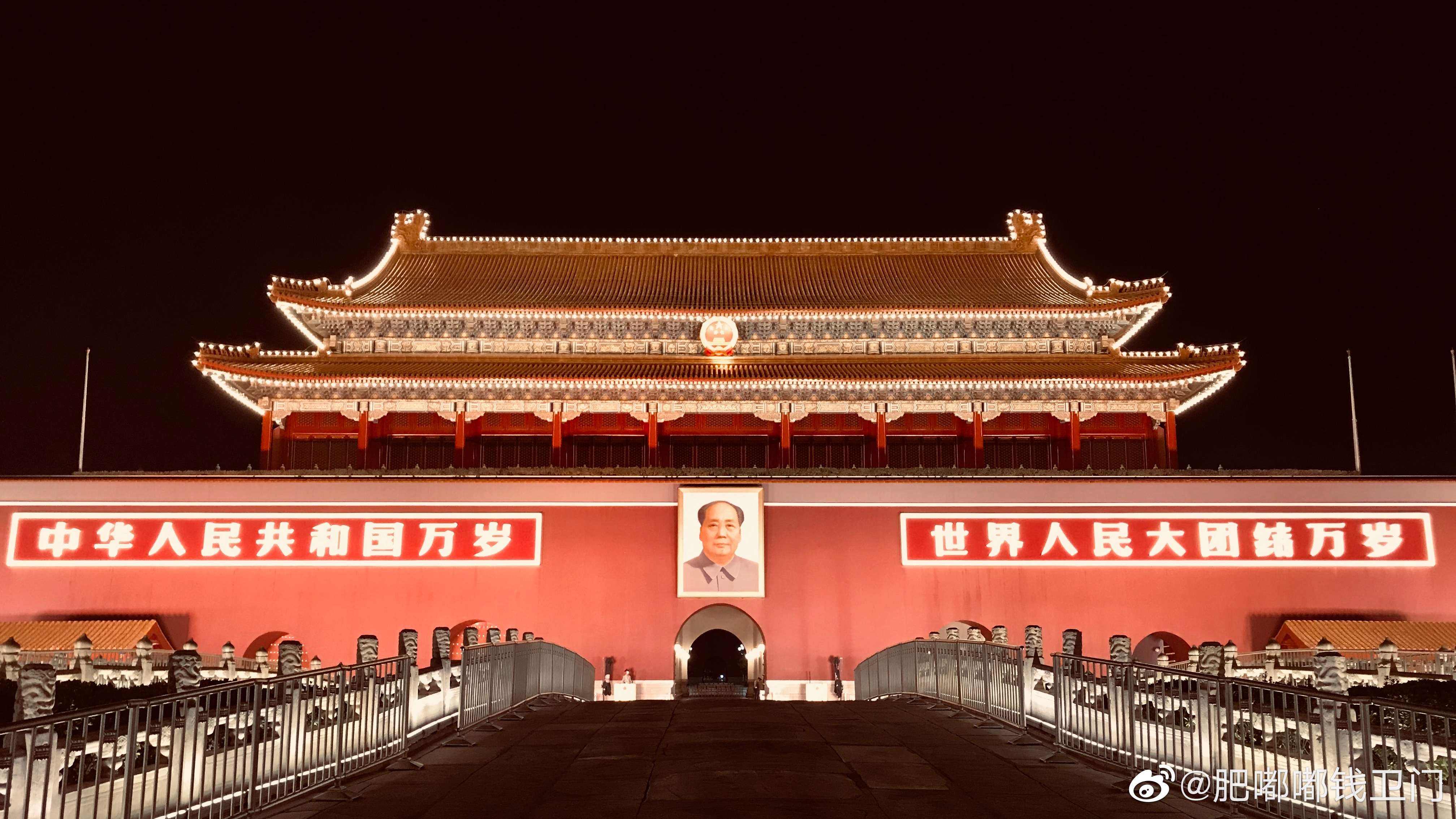
My strongest impression of Chang'an Avenue and the surrounding area was its sheer scale. Grand, spacious, imposing. The roads are incredibly wide, the buildings monumental, and even a casual walk ends up taking a long time.