The weekend is almost here, so here’s a sudden dump of what I’ve been watching. A lot of this began as short notes elsewhere, but I’m adding the thoughts that didn’t fit there: huge spoilers, huge feelings, and a few smaller stray observations.
Content warning up front: some of what follows includes war, mentions of sexual violence, and a fair amount of unhinged metaphor and character-objectification nonsense.
For whatever reason, the past couple of months turned into me watching a lot of Korean films and dramas. Korean filmmakers are absurdly good at this kind of East Asian fusion dish; the more I watched, the more I occasionally caught a faint Hong Kong cinema aftertaste in it too.
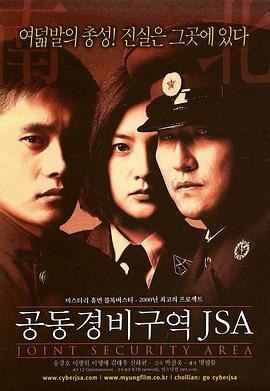
Joint Security Area
Watched on June 30, 2025
The production is rough in a very visible way, but the feelings are so real that it hardly matters. What stayed with me most was the birthday present scene — that line, “A soldier has to learn in one go! I can’t help you forever” — and the first time the dog runs across the boundary line, impulsive and brave, like he’s charging toward a love letter. And all those repeated “hyung, hyung”s — how are those not love letters too?
The ending reaches one of those rare emotional states where even the audience can feel it directly: that there is simply no way left to go on living.
This film pulled an enormous amount of feeling out of me. Not long ago I saw someone cut together a JSA edit with “A Better Tomorrow”-era Leslie music and I basically died on the spot. Enormous feelings, truly. I’ve also been listening to “The Days of Past” again lately, partly because of JSA, and partly because I saw an interview where someone mentioned Leslie and choked up while singing “light, light laughter.” Devastating.
And since I already spilled so many JSA thoughts before, I might as well gather them here too.
Major spoilers for JSA below.
I love the moment where Soo-hyeok fires two blank shots at his hyung. The older man is shocked twice over, and the fear in him is enormous. Later, when he’s asked if he has any message to pass on, he only whistles a few soft notes. That effortless gravity — and then the dog, soul gone, leaving even the lighter behind, carrying only the wish to die.
What’s frightening about the dog’s innocence in JSA is precisely how pure it is. At a certain point it becomes innocence that no longer distinguishes good from evil, that doesn’t care about opposition or borders at all. He crosses the line without understanding its weight, asks enemies for help, points a gun at friends. Terrifying dog. A fake letter is enough to summon his whole spirit away and send him gladly toward death.
I also kept thinking about the lighter being returned. It feels like a kind of final accounting, almost like a counterpart to the wiretap in Infernal Affairs. The older man says he won’t smoke anymore, as if he’s covering over this massive wound in his own way. You could also read it as: I’m giving back the thing you gave me, and with it, my wish that you might still find a reason to live.
At first, I also thought returning the lighter felt almost like returning a token of love. But the more I think about it, the more I feel that from beginning to end, the older man only wanted the best for him. His blessing is genuine; he even warmly welcomes the new friend the dog brings along. When they meet again at Panmunjom, it feels like the dog is one second away from telling the truth before everything overturns. And near the end, when he hears that Jung Woo-jin died on his own birthday and says, “I don’t think about dead people” — maybe for him, once someone is dead, they are simply dead. Everything else matters less than continuing to live.
So that lighter may really have been meant as something to leave behind: a little hope, a little expectation of life. But the dog has already reached that point where not dying is no longer possible. That’s what makes it unbearable. JSA is so cruel to him — how do you take a creature that pure and smash him to pieces in a place like that?
There’s also something incredibly moving in the older man’s love as a kind of quiet education. He understands the younger one’s reckless passion. Even after sternly answering the question of whether he wants to come South, he still reaches out with cake-covered hands to pet him. Later, when he’s bleeding and tells the dog to finish him off, the dog’s face is all tears and sweat; it feels like he’s handed over his whole heart by then. Why wouldn’t he trust him? When did hyung ever harm you?
And that moment when he sees the dog being dragged away, the hand holding the gun going limp — so full of feeling. From beginning to end there is one consistent line of love and protection there, and nothing fake in it. I always feel like he is someone who has seen more of life, maybe even worse and more terrifying things than that one night. In his view, life is long, and maybe this small creature who never took borders seriously should still have been able to go on living. But the dog hasn’t seen that much. In that moment, what he has done is already too much to bear. How does someone who has betrayed his friends keep living?
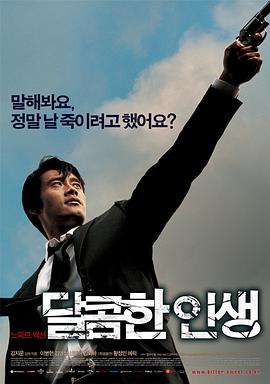
A Bittersweet Life
Watched on July 1, 2025
A sweet little girl’s adventure story.
My main problem with this one is that it’s too long. If the back half cut out about 80% of the gunfights that couldn’t be solved with a single bullet anyway — there are just too many bullets — and tightened itself to around 90 minutes, the pacing would be much better.
The first half, though, is delicious. The dog watches the woman in the blue sweater tie up her hair, dance, eat dessert, play violin, and he looks utterly dazed, exactly like a little girl staring at an older sister she adores. The wind moves, the leaves move, spring feeling moves. A miracle! Even the dog has worldly desires now!
And Lee Byung-hun looks absurdly beautiful here. The skin texture, the smoothness, the monolid eyes, the bow-shaped lips — several of those upward-looking side profiles are especially gorgeous. The camera frames him in stillness the way you’d frame a vase of flowers: all about quiet beauty. And the beauty, yes, lies in that tiny bit of innocence in those dog eyes.
The plot itself has more or less flowed through my brain like water and disappeared. What I remember most vividly is not the confrontation with the boss, but... a raccoon-speed combo attack that stabbed the dog 999 times in one second.
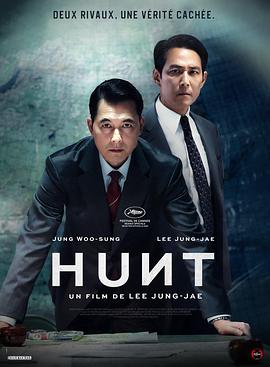
Hunt
Watched on July 23, 2025
This feels like it was supposed to be a film of strong emotional expression and large-scale political ideals, but some of the acting choices were so funny that by the end I was basically watching it while grinning. So these are the deputy directors of Namsan, huh.
One thing you can say for them: no internalized struggle here. The second there’s a problem, somebody gets slapped across the face. Minister Kim from The Man Standing Next could learn something — stop repressing yourself all day.
There’s a scene where they’re smacking each other around that made me literally widen my eyes and laugh out loud. Sorry. Jung Woo-sung is always funniest when he thinks he looks cool: taking off the coat, undoing the buttons, darkly wiping his face, washing up, every gesture screaming, “Hyung, I look handsome, right?” You didn’t have to say it aloud. I knew.
And at the very end: if you people from South and North Korea are trying to assassinate the South Korean president, why did Bangkok have to get blown up like that?
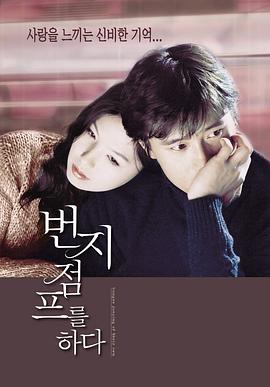
Bungee Jumping of Their Own
Watched on July 29, 2025
My overall reaction was: this is so strange. None of this makes sense.
But Lee Byung-hun in this really does have that innately dog-like quality: a pure dog face attached to a very different sort of body. In the college-boy section he has this especially delicate, easily-led feeling, just trotting after someone because they called. Later, as a teacher, the doggishness is slightly reined in, but he’s still very pretty. Then he gets cornered by a male student demanding, “You like me, don’t you? Why don’t we just date?” and all I could think was: excuse me, why has this suddenly become that kind of plot?
The story itself is just too bizarre. Honestly, maybe there was no reincarnation at all and someone simply couldn’t cope with being bi.
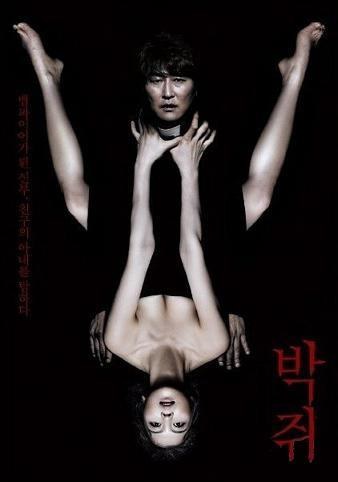
Thirst
Watched on August 14, 2025
This one was hard to take.
I actually liked Kim Ok-vin’s performance as Tae-ju, but the film as a whole left me feeling... Park Chan-wook, your kinks are kind of weird. The way Song Kang-ho is kneaded and molded and filmed like this — and then like this — what exactly are we doing here? So strange. So, so strange.
What I kept circling back to, though, was the ending setup in which the priest stages a kind of attempted sexual assault so that the woman will discover he is not some saint after all. Even amid the total sensory overload of the movie, that still struck me as a bad habit in storytelling.
No matter what purpose a rape scene is being put to, rape cannot produce a good outcome. There is no such thing as a rape committed with good intentions. When the plot sends a priest to rape a woman, it remains weirdly easy for some viewers to slide past the logic of it. But would the director dare send that same priest to rape a child? The function in the plot would not fundamentally change, and yet the supposed chain of “good intention” to “good result” would immediately collapse under the sheer antisocial horror of the act.
And yes, I know it’s a little ridiculous to be sitting here arguing about whether a Category III-ish movie is misusing rape as a device. But still. Once I started thinking about it, I couldn’t stop.
It also made me think of that famous moral contrast: going back in time to kill Hitler, versus going back in time to rape Hitler. The difference between those two ideas tells you something important.
During this stretch I also watched The Match, The Man Standing Next, and Inside Men — the last of which I disliked — plus Cho Seung-woo’s Perfect Game. But most of my thoughts on those were just me pointing at people’s faces, so I’ll spare everyone.
On the drama side, I also watched Mr. Sunshine.
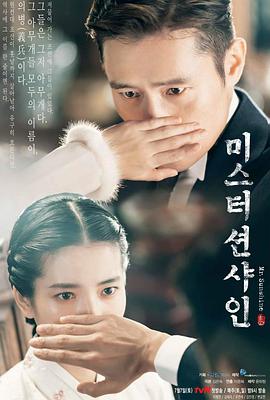
Mr. Sunshine
Watched on July 17, 2025
My first reaction was basically: well, watching Koreans do a grand anti-Japanese epic certainly makes me go, wow, okay, huh.
By April 2026, after finishing it, my distilled thought was simply: please watch it, this is one of the best television dramas in the world, and its American cat-boy is one of the best cat-boys in the world.
After thinking it over, I do feel the pacing drags a little. There are too many slow-motion shots interrupting the rhythm. But beyond that, I liked it far more than I expected to. I especially liked that this is a story that seems to arrive carrying revenge, only to eventually set it down gently. It avoids the usual paths where everything ends either in bloodshed or in a reconciliation that feels hollow.
Eugene is genuinely moving as a character. In the first half, the show has that almost gleeful romance-drama energy of “oh, he loves her” and “oh, he loves her too,” with one woman and many men orbiting around her. Kim Tae-ri is vivid and lovable — dignified one moment, fierce the next, and then suddenly so cute in those “I know nothing, I can only stand here like a painting” moments.
Nearly all of the language-related material is delightful. The writer is really good at this. Some of the anti-colonial dialogue near the end inevitably turns a little corny, but because the interactions between the leads stay so clean and appealing, I let it pass. Though next to Kim Tae-ri, Lee Byung-hun still looks a little too old.
I especially loved the running jokes and emotional beats built around language. At first, when Ae-shin writes “I miss you,” Eugene can’t read Korean, so he doesn’t understand it. Later, after suffering a personal loss, he writes to tell her not to worry and includes the phrase “i miss you,” adding that someone as quick at learning as she is must surely have learned that sentence by now. She rushes over to retrieve the letter, probably hoping she might see him too, only to end up holding it sadly and saying, “Looks like we missed each other.”
There are many moments like that. And the final “Fish, not Pish” is adorable too. The drama gets so much mileage out of tiny linguistic misalignments, and it makes them unexpectedly moving.
Over these two months I also caught Aftersun in a theater again, and I still like it very much. And since I’m already collecting things, I might as well include this one from June too.
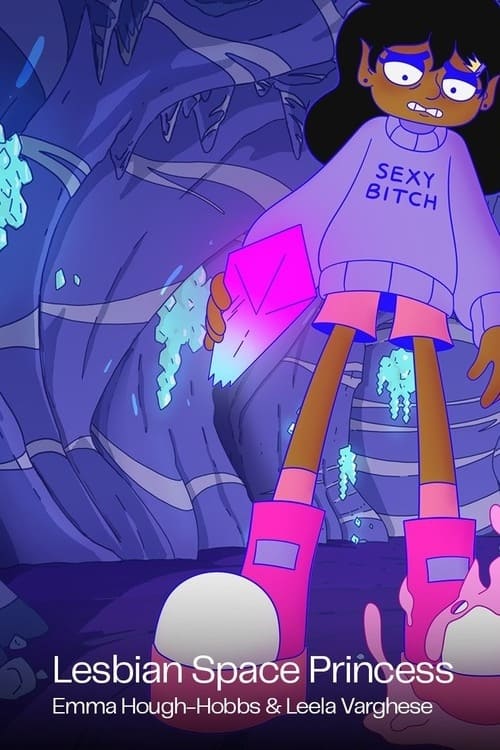
Lesbian Space Princess
Watched on June 11, 2025
Possibly not a compliment, but anyway:
Trigger warning here too — despite being called Lesbian Space Princess, this film still contains a lethal quantity of dicks. If you’re afraid of dicks, flee now.
The age rating should be at least 21. It wears a cute animated shell, but inside is some of the year’s highest concentration of profanity and sex jokes. Some of those jokes work, some are tired. One of the funnier bits is asking a straight male spaceship, “You’re not from the 21st century, are you?”
If I have to put my finger on it, the film mostly traffics in very typical, standardized queer imagery. Maybe it’s a runtime issue, but pronouns, open relationships, poly relationships — it all gets handled in one-line mentions, fairly surface-level. At least for me, the film never touched anything personal or intimate.
It is, however, undeniably civilized. Well. Civilized except for the drag queen villain and the sudden explosions of gore. Those were the moments that finally made me exhale and think, yes, finally. After pushing through gender-and-sexuality jokes that sometimes felt clichéd and not very funny, the film eventually reveals something far more distinctly queer. Especially by the end, when the chick magnet section turns into a totally unnecessary carpet of flesh and blood — that was exactly the kind of “you absolutely didn’t need to do this, but you did anyway” choice that I love.
Back in May I also saw Ghost in the Shell in a cinema. My god, perfect. And after watching it, I suddenly realized where Judy’s phone icon in Cyberpunk 2077 was coming from: Ghost in the Shell, of course.
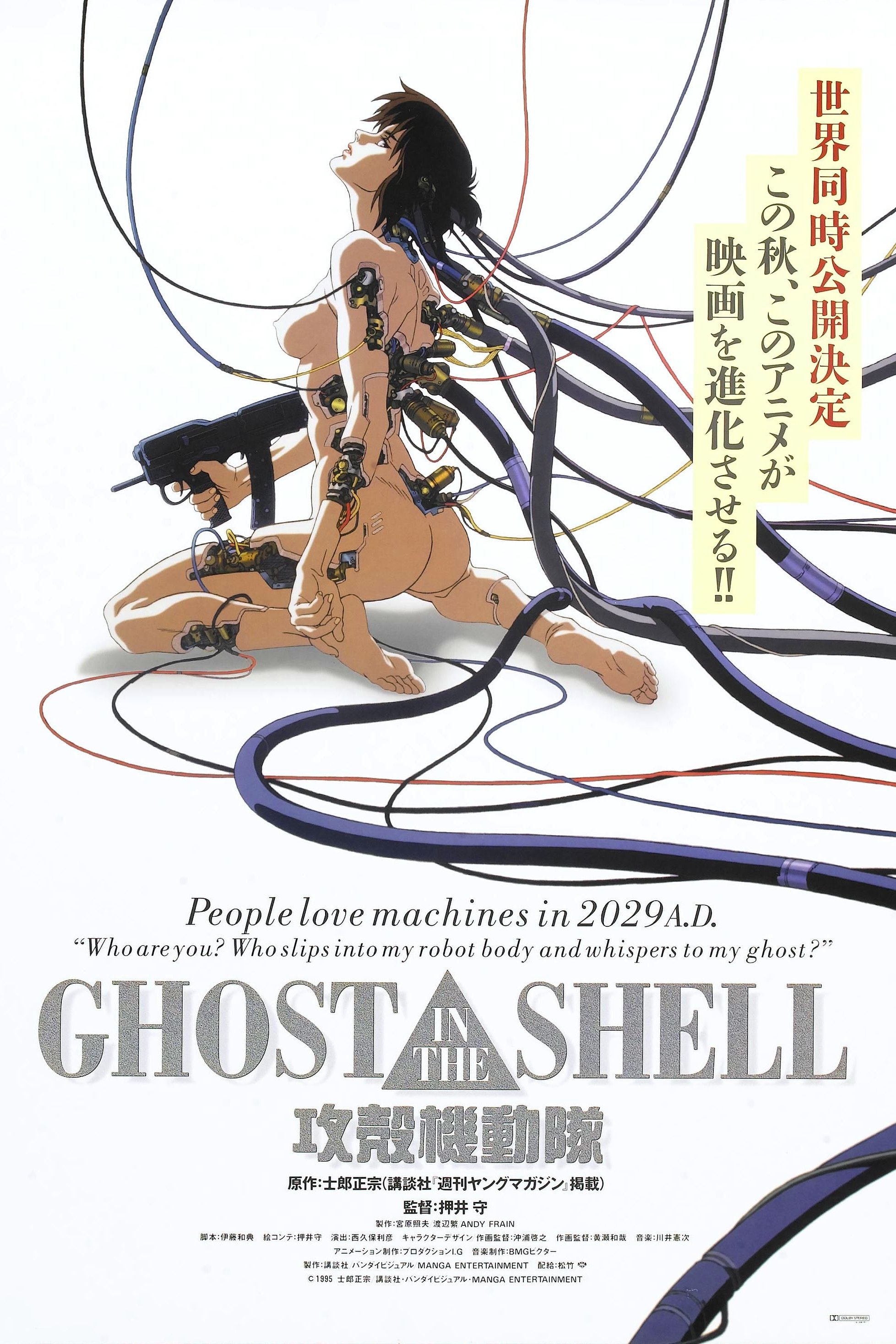
Ghost in the Shell (1995)
Watched on May 18, 2025
Is this really what aesthetics looked like thirty years ago? Throughout the entire film my brain was just: cat universe jpg. It’s unbelievably exquisite.
That said, when the ending moved into the girl body, I instantly went on alert. I had assumed it might be Motoko’s memory or something — not that. Even so, I loved it. A very, very turn-on sort of film for me. It is just... too much in exactly the right way.
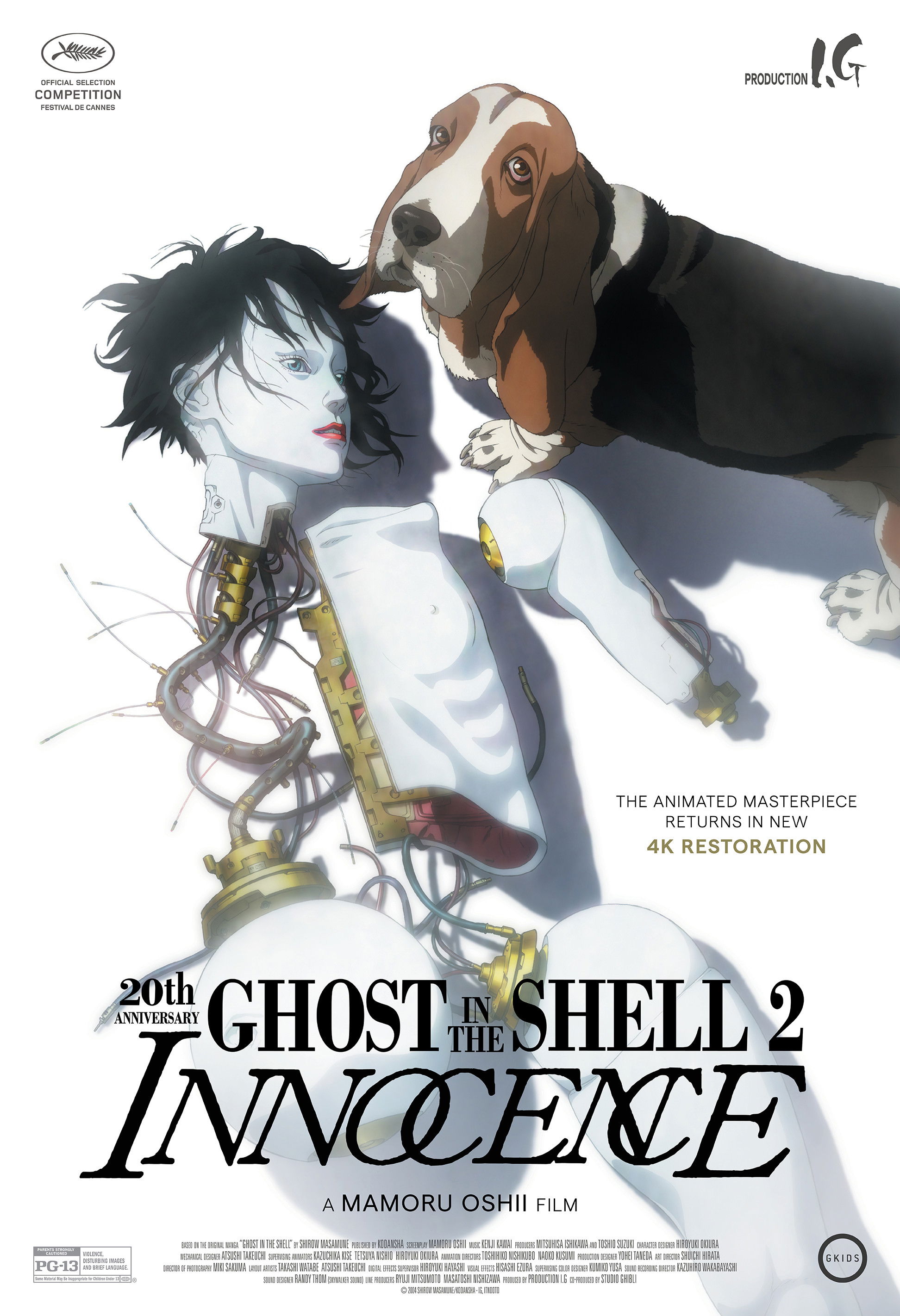
Ghost in the Shell 2: Innocence
Watched on May 26, 2025
A very strong sequel. Compared to the 1995 film, it goes a little deeper into its thematic concerns, and I loved the middle section with the dolls and robots, and Kim’s labyrinthine mansion. Beautiful.
My only regret is that the Major appears too little.
Batou is incredibly charming here: a tall, taciturn, dull man with no visible private life besides raising a dog and buying dog food. I love watching that sort of man. I loved the little detail of him fishing the dog’s ear out, and I loved the enormous pain in the question he asks the Major: “Are you happy now?” It’s so well drawn. The music in this one is excellent too.
I can’t remember whether I already talked about Happyend before, but I loved it so much that I’m bringing it up again anyway.
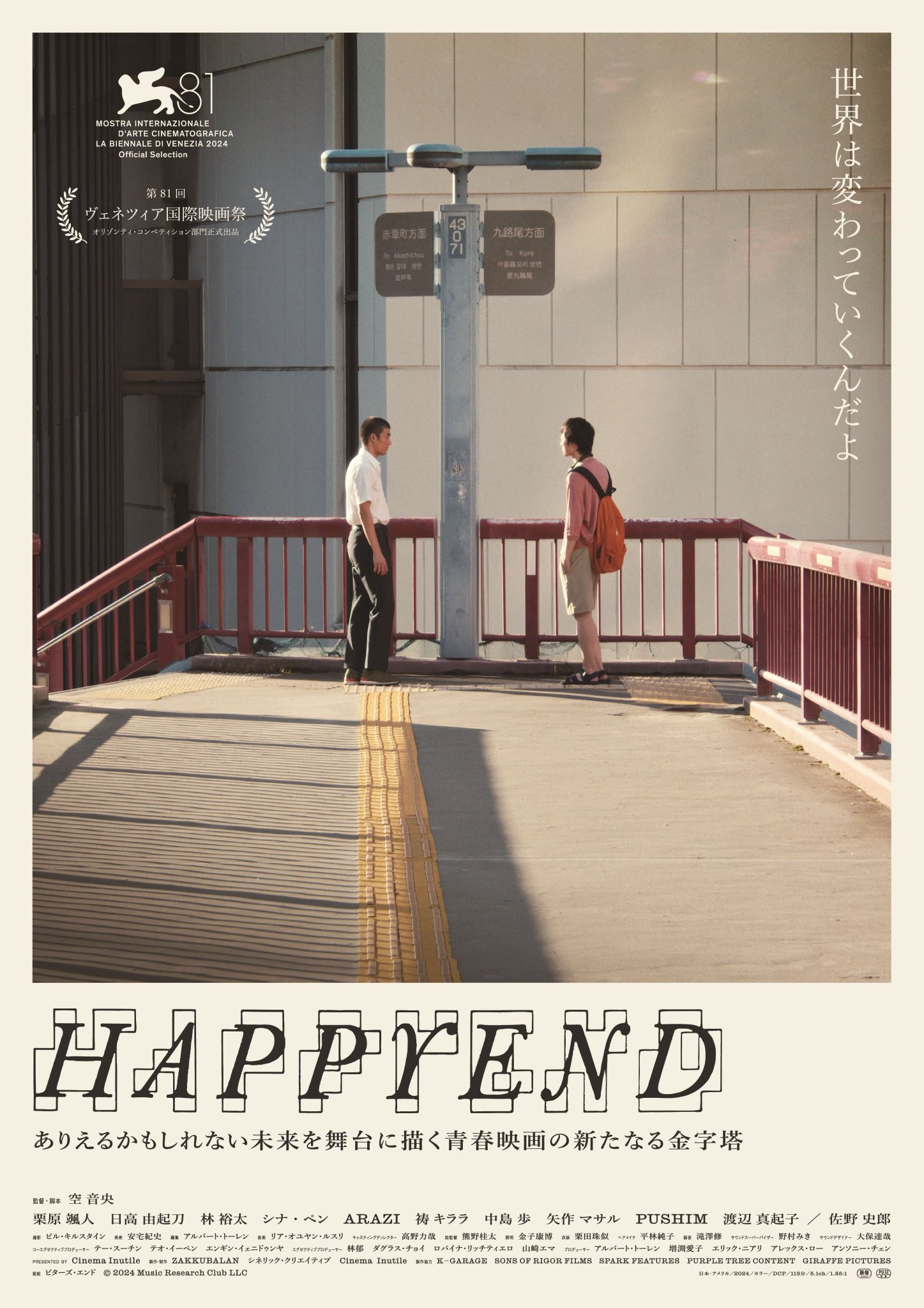
Happyend
Watched on May 7, 2025
I liked this a lot. It’s one of those films that feels very clear and fresh: good boys and girls, very light emotions preserved, but expressed in a distinctly queer way. A friend wanted to see it partly because the director once said, “Friendship is itself a very queer relationship.” The whole film feels clean in that sense.
But after sitting with it, it hit me hard. Every youth story is, in the end, a story about youth ending. What no one tells you is that youth can also end because identity and political alignment enter the picture, making “we are different kinds of people” glare out in a way that is both brutal and unavoidable. Once you grow up, love, music, and intimacy turn out not to be enough.
I had also read an interview with the director in which he said that films stripped of politics are often the most political of all. One part stayed with me in particular:
“Friendship is interesting because it has no rules. It can be anything from the most superficial to the deepest relationship. And because friendship is so ambiguous, it becomes very difficult to navigate.
But what I really want to ask is: why do the state and society place sexual relationships such as romance and marriage above friendship? We know that for some people, their relationship with a pet matters more than anything else. We need to make room for other forms of relationship. They are important social bonds too, just like sexual relationships. Maybe the best way isn’t to privilege other relationships, but to destroy the system that privileges one kind of relationship — like marriage.
In Japan, if you want to visit someone you love in the hospital, you need to be in a formally registered marriage, especially during the pandemic — and even married people often struggled then. But what reason do we have to say that someone’s wife is more important than their best friend? Maybe their best friend is the most important person in their life.
Exploring the ambiguity of friendship, and the importance of friendship, is something I think about in everyday life and something I want to show in film.”
I really do think friendship and love in youth are both very strong and very fragile.
Watching Happyend with a friend made me abruptly remember an actual friendship in my own life that had indeed been affected by political difference. We stopped speaking in late 2022 or early 2023 after a fierce conversation about a news event: a journalism student had been arrested for holding up a blank sheet of paper, and a newspaper later said that if the student couldn’t find work after graduation, they would offer her a job.
At the time, my friend was preparing for graduate study in journalism, so I sent her the news item. We talked late into the night and ended up at odds. I no longer remember every detail clearly, but I do remember that she believed the line “the media is the Party’s mouthpiece” was correct, and that the student’s actions were not worthy of approval. I was stunned.
Thinking back now, maybe it wasn’t exactly a fight. It was just a very intense discussion that went on for a long time, and neither of us could persuade the other. The conversation ended coldly, and after that we never contacted each other again. We had spent a lot of time together. I can still find photos of us eating together in my album, and dishes she brought me from home.
What I know is that real, offline companionship — the comfort of truly knowing someone and sharing life with them — has always meant more to me than ideological agreement. But the thing is, that night we accidentally opened a box that could not be unopened. And once it was open, the destructive things flew out, and we could never go back to the time before it.
Another friend once told me maybe it was for the best that it ended then, that she might have become the kind of person who would report me one day. I don’t think she was that kind of person.
We had known each other a long time, but the period when we really began talking seriously started around the Xuzhou trafficking case. I remember many conversations we had. One night we were at a gathering; work was nearly over and we should have been in a good mood, but instead everyone felt heavy. During dinner we realized it was because we had all seen the Tangshan restaurant beating case.
People are complicated. We were nowhere near some dramatic point where friendship absolutely had to end. But we did reach that sudden moment where it became impossible to keep going in the same way. It sounds strange, perhaps, to be so pained and shaken by “news,” but from 2020 to 2023 our lives really were organized around things like that. Looking back, that was the period in my life when waking or sleeping meant pain. There was almost no private life. News was life. So when there was a disagreement over the news, the disagreement felt much harder to bridge.
That period was too specific, too pressurized. I even think that if the same political disagreement happened today, neither of us would necessarily react with the same intensity we did that night — intense enough that not a single word passed between us ever again.
Another line from that interview said:
“So your film is also mourning the lost possibility of making friends with people who hold different political views.”
Neo Sora: “I think so. I really want to go back to those days when we made friends without overthinking it.”
That sentence — “I really want to go back to those days when we made friends without overthinking it” — hits me very, very hard.