In Swedish doctoral training, PhD students who are employed by the university are expected to take on a certain amount of teaching. From the time I started my PhD, my supervisor had been trying to find opportunities for me, but because of scheduling and other arrangements, nothing had worked out. Part of my research also involved setting up a lab, so for a while that gap in my "teaching duties" was reasonably covered as departmental work.
To be clear, this teaching requirement did not mean a PhD student would be handed full responsibility for an entire course. More often, it meant participating in the teaching around a course: leading problem-solving sessions, grading during exam periods, or helping guide students in lab classes. Maybe my supervisor was also a little anxious about getting my teaching requirement sorted out, because this semester he took on an undergraduate mechanics course himself. That made it easy for the two PhD students under him, including me, to step in and teach the exercise sessions.
Before the semester began, he kept explaining why this teaching component mattered: every PhD student is supposed to graduate with some real teaching experience. Honestly, I was happy to do it. In the serious sense, teaching undergraduates was well within what my academic background could handle. In the less serious sense, there was also something amusingly satisfying about a person under 170 cm standing at the front of the room while a class full of tall, solidly built Swedish students listened from below. It had a certain conquering-the-room feeling to it.
When I was doing my master's degree in Sweden, some of my classes were also taught by PhD students. The thing that stayed with me most strongly was how important interaction is, especially in problem sessions. I kept thinking back to high school teachers who would guide students step by step at the board, helping them build the method rather than simply showing the answer. I had also attended exercise classes led by PhD students who more or less just read out the official solutions without explaining the reasoning at all. That kind of session is almost useless. If all I wanted was the final answer, I could have sat alone with the solution sheet and figured it out myself.
So when it became my turn to teach, I prepared seriously from the start. For every exercise class, I would go through the material twice. The first round was to get familiar with the problems and the prescribed solutions. The second round was the real preparation: Why does this approach work? What idea should students notice first? How can I guide them toward the method instead of just presenting it to them?
After all that preparation, I walked into my first class. I was genuinely nervous at the door, but the nerves faded after I introduced myself and started working through the first problem. The students were listening quietly, and once that happened, it felt like the room was mine. So I went into full old-school-teacher mode—not putting on airs, just using that careful, step-by-step style—prompting their thinking and explaining each piece of the logic and each relevant formula as clearly as I could. Overall, the first session felt good. The only downside was how hard teaching is on the voice; by the end of class I was already hoarse.
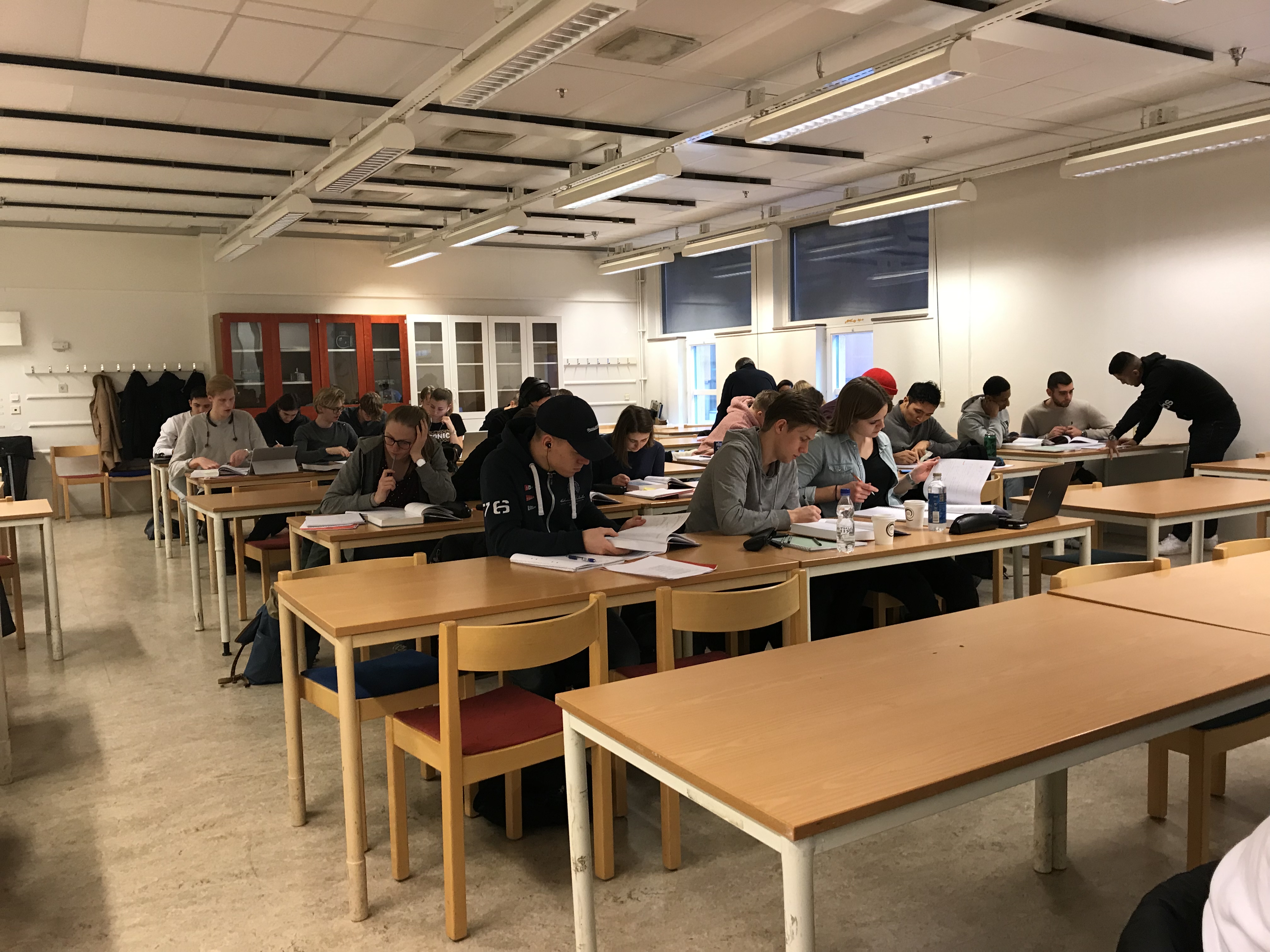
Very quickly, though, I realized the students were at very different levels. If I moved too fast, some of them immediately looked lost. It was only during questions after class that I really saw the gap. Some students had a strong enough foundation to follow my pace and my line of reasoning without any trouble. Others were still not clear on something as basic as when to use sine and when to use cosine in trigonometry.
Because of that, I slowed things down in later sessions so that everyone had a chance to understand where each calculation came from. The downside was that I could no longer get through all the assigned exercises within the two-hour class. So I adjusted my strategy again. Instead of trying to cover everything, I focused on the most representative and broadly useful problems, and left the simpler ones for students to think about afterward. If they got stuck, they could always ask me separately.
I also made a point of telling everyone before class that they were welcome to contact me with questions afterward and that I was happy to help. I had assumed the weaker students would be the ones most likely to come ask things. Strangely, they were often the least proactive. At moments like that, I could suddenly understand why high school teachers say things like: you are the weakest class I have ever taught, your foundation is poor and you still do not ask questions—are you just waiting to fail?
At that point I had been teaching for two weeks, and overall I felt good about it. I just hoped the next six weeks would go just as smoothly. And honestly, if you do not understand something and still refuse to ask, then failing is on you.
Update: 2019-03-16
Yesterday I finally finished the last exercise session, which means my first teaching assistant experience is officially over. Overall, it was a very good experience, especially because of the feedback I got from interacting with the students.
Around the middle of the course, I asked them to write anonymous comments and evaluations for me. The positive feedback was mostly similar in theme: they said my teaching was well organized and easy to follow. A few comments stood out more personally. Some students told me quite frankly that my teaching style was the reason they kept coming specifically to my sessions, and that my exercise classes gave them a clear sense of direction. I have to admit those comments gave me a huge boost. They made me more confident walking into each class, and they also made me believe that my way of teaching could genuinely help more students. The one recurring criticism was that I did not teach in Swedish, which made it harder for some students to follow.
Because the course had been expected to attract a large number of students, it was originally set up with two teaching assistants leading two separate groups. I taught one group, and a colleague of mine taught the other. But based on student feedback, my colleague's teaching method was not especially well received. As a result, his group usually had only one or two students attending, and sometimes none at all. The course teacher—who was also our supervisor—felt that continuing like that was simply a waste of teaching resources. So in the second half of the course, my colleague's scheduled class time was changed into office hours for questions, while my slot remained the regular exercise session, taught by the two of us on a rotating basis. After that change, many of my students kept asking me exactly when I would be teaching. It seems they had genuinely become used to my style.
In yesterday's final exercise class, I summarized the key points for the exam and also went over the small but repeated mistakes I had seen while grading their assignments. I really, truly did not want them making the same avoidable errors again. When grading one quiz, I found that many students could not even combine like terms properly. Some were worse: they did not even read the problem conditions carefully before starting their analysis. For example, a problem would explicitly say the surface was smooth, and they would still insist on analyzing friction. Or it would say the object was a plate and ask for the center of mass, and someone would decide to treat it as a frame instead. If this had happened back home, I would probably have scolded them on the spot for solving blindly without even reading the question properly.
So in that last class, I was basically holding back my frustration while tapping the board and emphasizing every word: read the question carefully, pay attention to the given conditions, and remember to combine like terms.
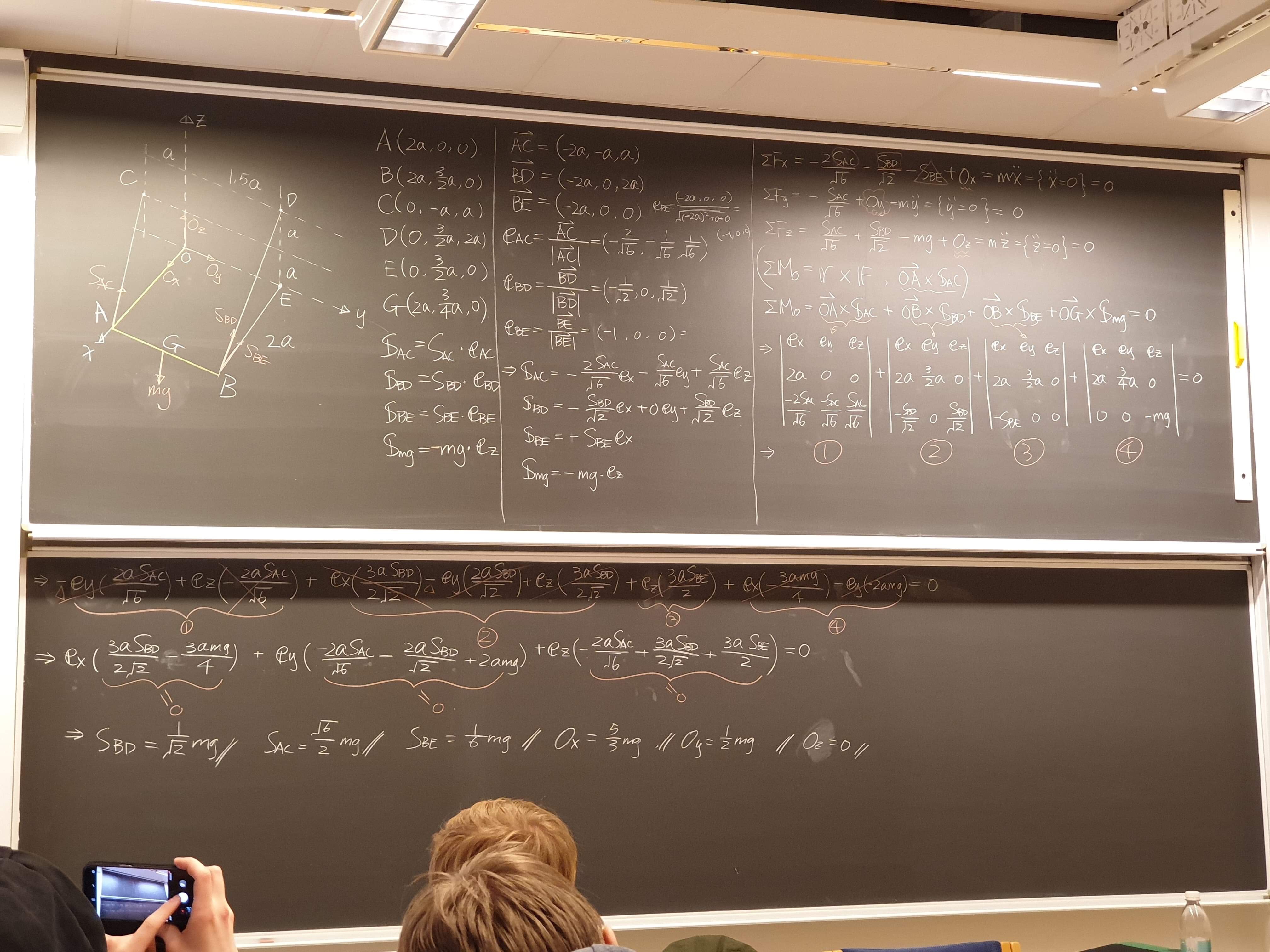
After class, a few students I had gotten along with quite well said they wanted to have a meal with me after the exam. That is obviously too good an opportunity to waste. If that happens, I am absolutely going to introduce them to hotpot.