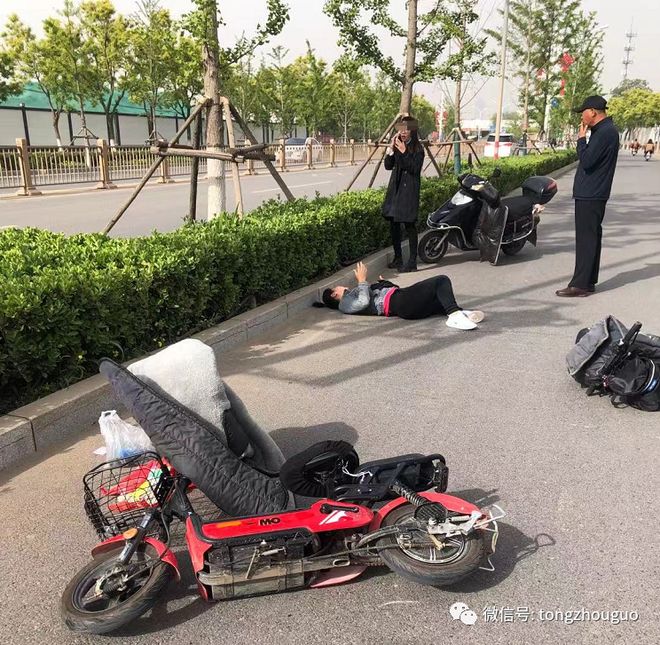
A report from Henan left me angry, shaken, and unable to understand how traffic enforcement could be carried out with such disregard for human life.
The incident took place in Yanjin County, Xinxiang. On April 29, 2008, Zhang Jinying, a villager from Dongzhuang Village in Xinzhen Town, Jun County, Hebi, reported that officials from the Yanjin County Transportation Bureau had carried out an allegedly unlawful roadside inspection. During the incident, his 20-year-old niece, Zhang Haijing, was killed in a road accident while traveling to work.
The report described the case as another example of the persistent problem known in China as the “three road-related abuses”—unlawful fees, fines, and inspections carried out by transport authorities. These practices had repeatedly been declared a matter of concern by the Henan provincial government and transport authorities, yet some local departments continued to ignore regulations and, in some cases, enforce them violently.
The photographs accompanying the report were horrifying. Even before I had finished reading, the images of blood and wreckage had left me stunned. A young woman of only 20, at the age when life should have been opening before her, had died after what was described as an improper vehicle inspection by Henan traffic personnel. Her family was left with an unbearable loss, and the circumstances made the tragedy even more difficult to accept.
What kind of public service is this? Officials have long spoken of loving the people as if they were their own children and of serving the people. With the Beijing Olympics approaching and the eyes of the world turning toward China, what should people see? They should see how officials treat ordinary citizens when no ceremony, slogan, or carefully prepared speech is present—how they protect people, and how they respond when their own actions cause harm.
Traffic officers may have the power to impose heavy penalties on vehicles that violate the rules. They may collect thousands of yuan in fines, and the abuse of such authority can easily become a source of corruption. Greed, however, is not an excuse for causing death. The most disturbing question in this case is not merely whether money was collected unlawfully, but whether enforcement officers drove a living person toward the wheels of a vehicle and then treated the consequences as someone else’s problem.
The suffering did not end with the crash. According to the account, the victim’s relatives said that the Transportation Bureau refused to compensate the family. When Zhang Jinshan, Zhang Yanbo, and Zhang Jinren went to the bureau to seek an explanation, they were allegedly attacked with clubs shortly after entering the compound. More than 20 people, reportedly brought together by the bureau and led by a bald man, were said to have been waiting outside. The family called the police, and the assault was stopped only after officers arrived about ten minutes later.
If this account is accurate, the response is more than bureaucratic indifference. It suggests that an administrative department may have tried to use violence to silence relatives seeking justice. A government office should not become a place where grieving families are beaten, intimidated, or treated as troublemakers. When officials respond to a death with denial and force, the damage reaches far beyond one family: it destroys public trust in law, authority, and the meaning of “serving the people.”
China’s social reality can feel unbearably heavy when tragedies occur every day and ordinary people find neither timely protection nor a fair remedy. The state may fail to rescue its citizens when they are in danger, while some of its own agents continue to harm them. That contradiction is impossible to dismiss as an isolated administrative mistake.
Power without effective oversight breeds corruption; absolute power breeds corruption on an even larger scale. How many officials would dare to claim that they are entirely clean? How many would honestly say that corruption has not reached deep into the system? The death of a 20-year-old woman, followed by allegations of refusal to compensate and violence against her relatives, demands more than slogans. It demands an investigation, accountability, and an answer to the most basic question of all: who will protect ordinary people from the authorities meant to protect them?