At the end of 2023, I closed out my hiking year with a small pilgrimage-and-walk combo: Yuhang's Jingshan Temple, then a short trail. The temple has a good setting and is often described as the foremost of Zhejiang's five monasteries and ten temples, part of a Southern Song grouping of official Buddhist sites. Zhang Shiqing's book on the Five Mountains and Ten Temples and Southern Song Jiangnan Chan monasteries covers the background; counting through it, I realized I had already visited quite a few. Jingshan itself has become a bit of an internet-famous temple in recent years, though the complex was rebuilt after 2010 and parts were still under repair when I went. The style works, and I would recommend a walk around. The vegetarian noodles are worth trying. The coffee, however: a strong no. Nice packaging, bad taste.
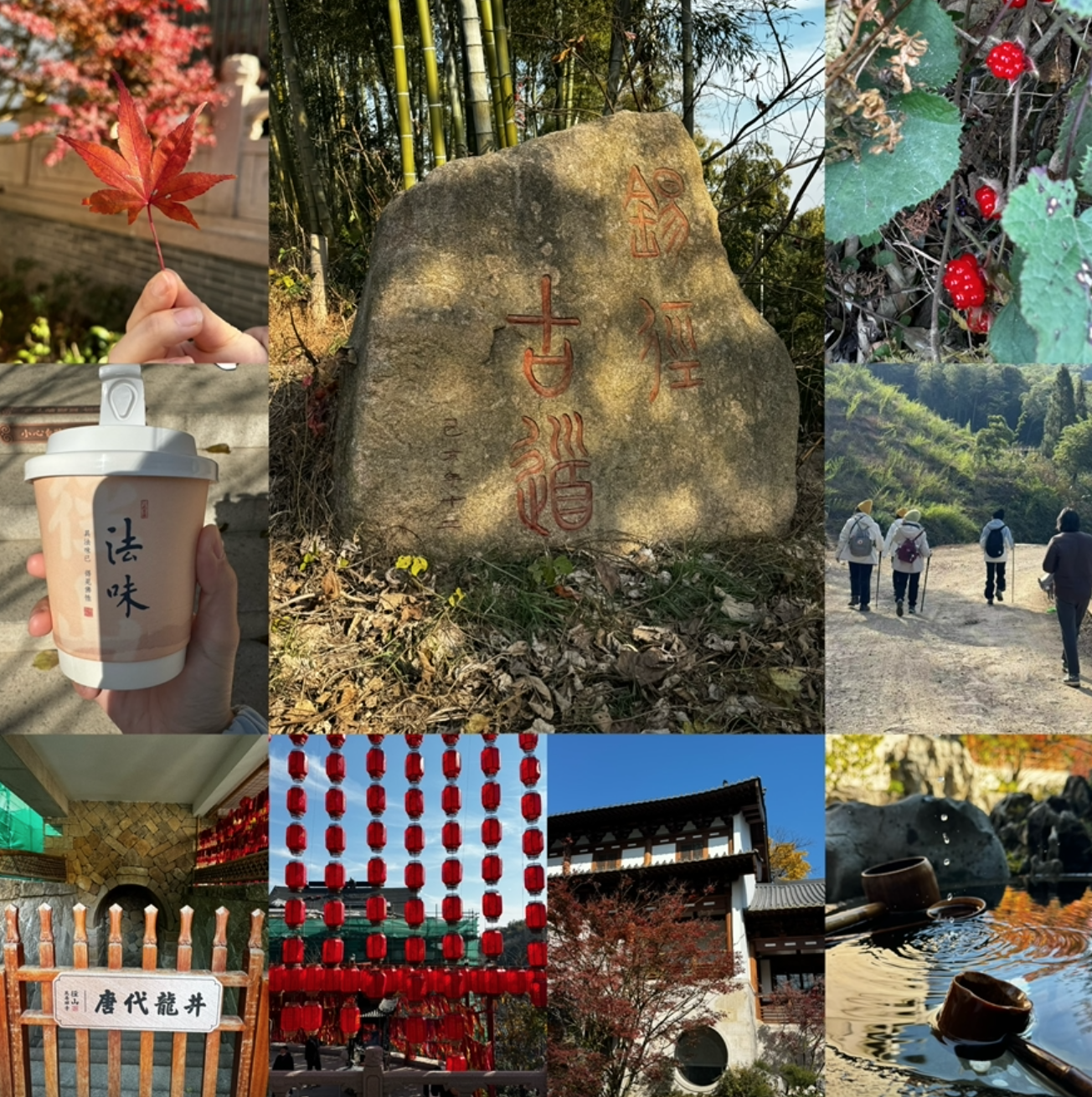
After paying respects, we started the hike, following a Liuzhijiao route in reverse. I had not expected much, but the intensity was even lower than we imagined: reverse direction meant downhill almost all the way, and we finished in about two hours. I had worried the temple visit ate too much time; it did not. We were down the mountain by four and back in Shanghai a little after six. Everyone agreed hiking was fun and wanted more.
The only Shanghai-area hikes I can define clearly were earlier Taizhou trips: Gongyu–Shenxianju and Feiying Trail, both with a bit of wading and scrambling. I still like talking about them.
The first hike of 2023 was a March team-building outing to Qionglong Mountain in Suzhou. At the summit is the God of Wealth hall in Shangzhen Temple, said to be quite effective, which gave everyone a reason to push to the top. The route itself was not interesting: we bought tickets, entered the scenic area, and followed the designated path. Maybe that is the difference people mean between hiking and mountain climbing, whether you walk wild trails? It took two or three hours, an easy introduction.
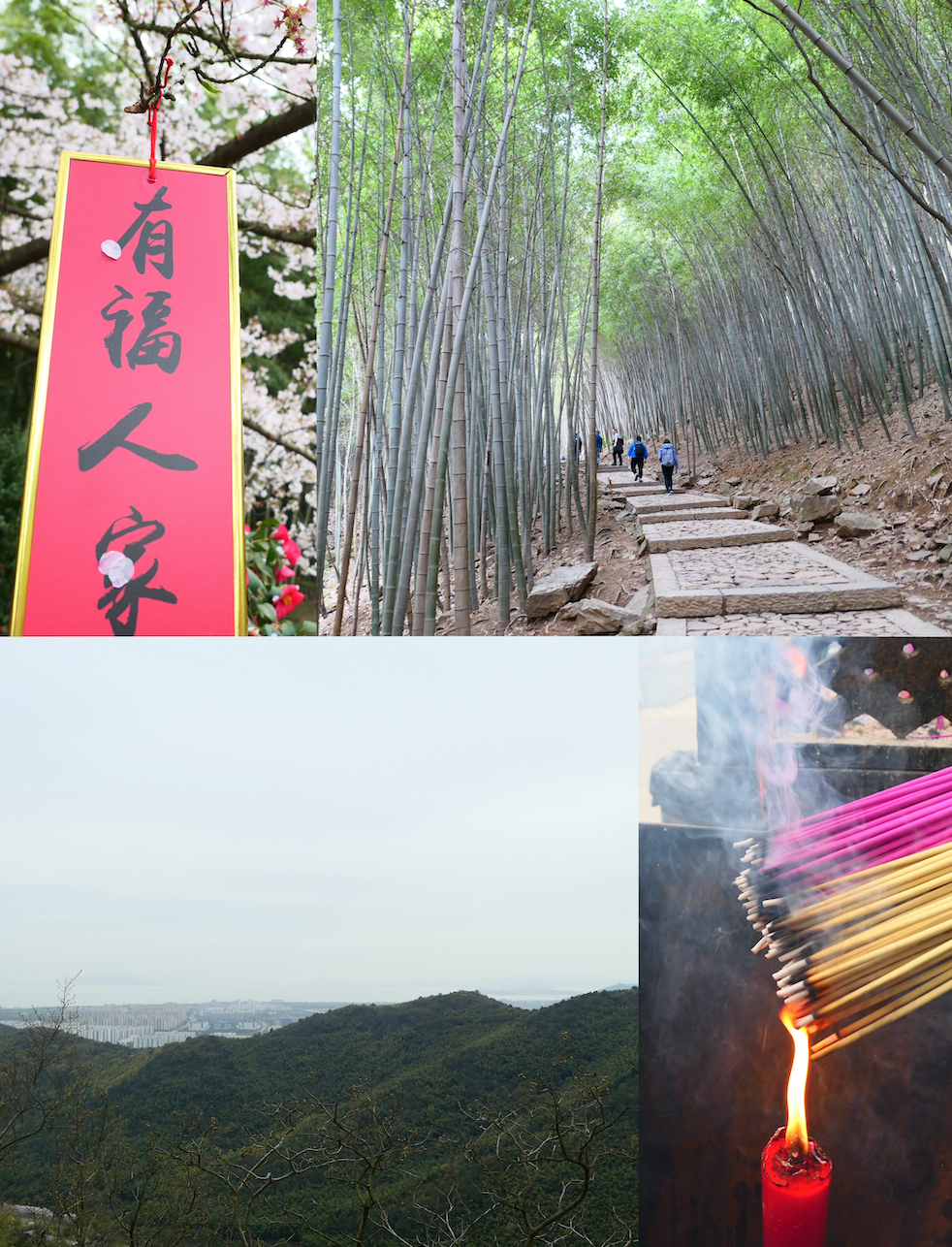
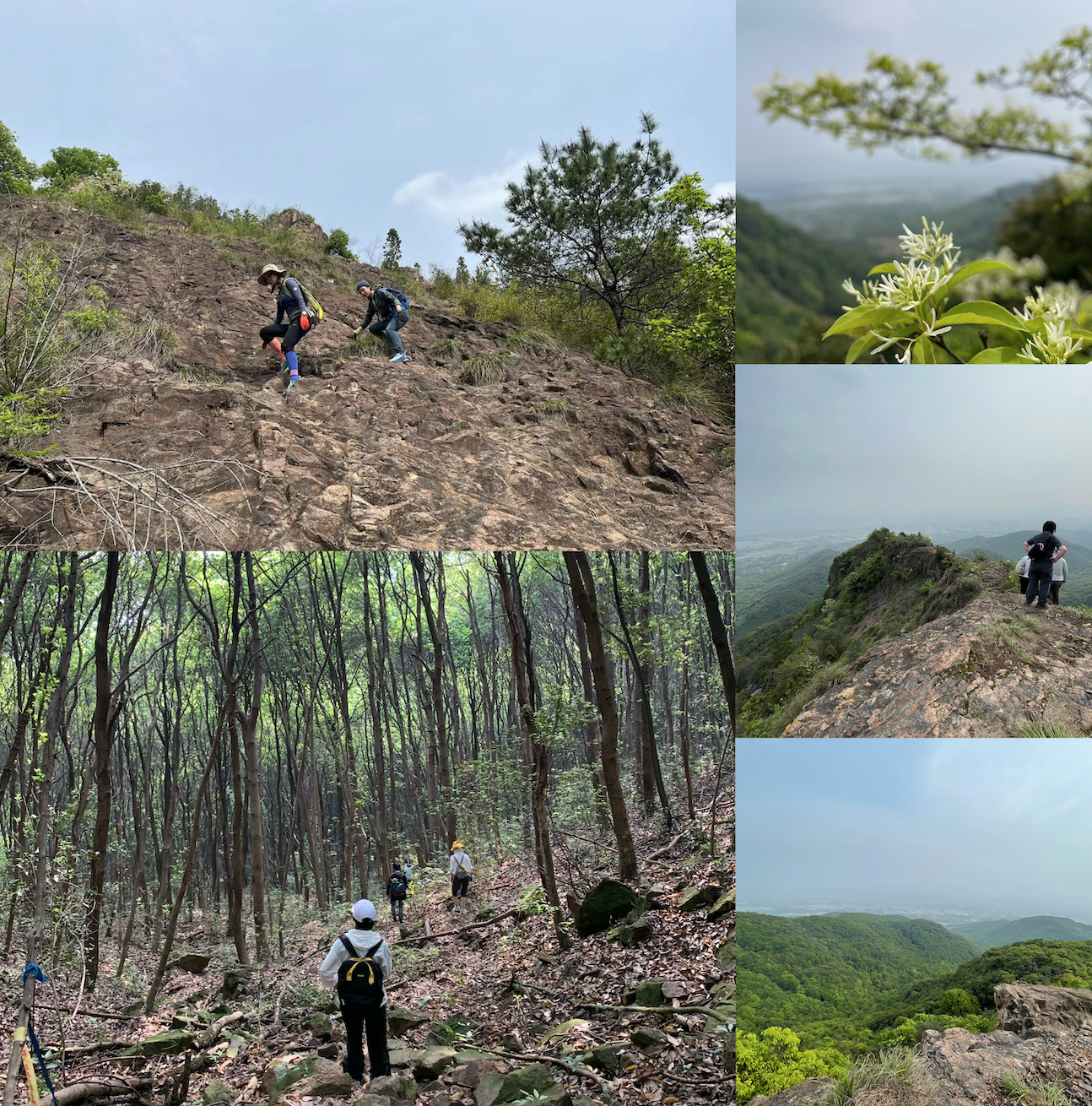
In April I saw a wild-climbing route recommended on Youxiake and, on impulse, talked a group into going. Of the seven people, three or four had never done any outdoor hiking. The fun came from sections where we had to use ropes and all four limbs. It also confirmed something about me: plenty of agility, not enough endurance. Some of the newcomers discovered they liked hiking, which set up later trips.
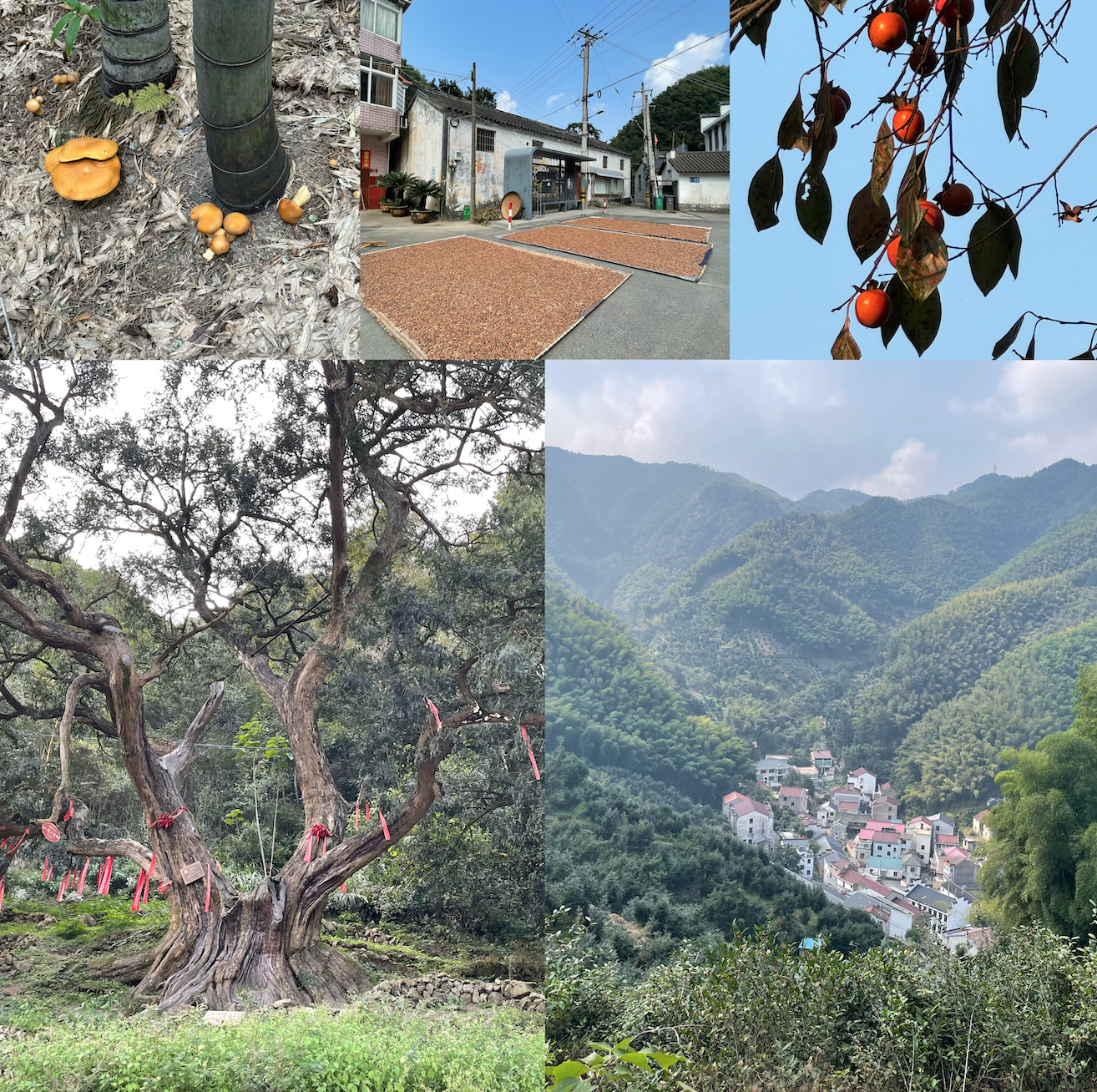
In October, wanting to relax, I picked another Youxiake route. The webpage said two-star leisure; by the time we finished, it had been reclassified as a somewhat difficult three-star. I do not know if it was because I had not exercised for most of the year or because the pace at the front was pulled too fast at the start. For the first hour or so my heart rate was redlining, and I nearly blacked out on the trail. The endpoint had a thousand-year-old torreya tree. That was my first encounter with torreya: all along the route were trees big and small, and the local villagers seemed to rely on it as a main cash crop. Roasted, the nuts taste something like pecans. Walking that stretch, I kept thinking that rural Zhejiang is on another level, so much better off than many other places.
Zhejiang has a lot of mountains, which makes it genuinely good for hiking. Friends sometimes ask whether you need a lot of professional gear. Like running, yes, eventually; but for beginners like us the intensity has not reached the point where that should be the first concern. A comfortable pair of grippy shoes, no showing off on distance, joining organized hikes or sticking to official scenic-area routes, that is most of it. If you are especially careful about your body, a trekking pole and knee pads are enough.
All in all, hiking is still less bitter than going to work. Get outside when you can. Where to next?