For the past year, AI agent demos have been everywhere. One day it’s a compiler that supposedly writes 100,000 lines of code by itself; the next day it’s an assistant that books flights as casually as ordering takeout. But anyone building real systems already knows the gap between a flashy demo and a production deployment is enormous.
The reason is simple: agents are fragile in exactly the ways production systems cannot afford. Change a prompt by two words, and the model that looked brilliant yesterday may suddenly start behaving erratically today—spamming tool calls, wiping a database, or getting trapped in an expensive loop. That is why so many people quietly settled on the same conclusion: without governance, rollback, and containment, an agent is still mostly a toy.
That is what makes Anthropic’s public beta for Managed Agents so notable. There was no giant model launch attached to it, no dramatic “future is here” spectacle—just a practical piece of infrastructure. And in some ways, that is more important. It suggests AI agents are finally moving toward the standards normal software has lived with for years: deployable, reversible, and manageable.
Stop hand-building the ugliest parts yourself
Until now, getting an agent to run reliably inside an actual product usually meant writing a pile of deeply unpleasant orchestration code by hand. You had to figure out how to manage long and growing context histories, how to catch and recover from malformed JSON, and how to prevent crashes under concurrency with locking and defensive controls. It often felt less like building modern software and more like assembling a web app in assembly language.
Managed Agents changes that framing. Instead of offering just another model API, Anthropic is effectively packaging a platform layer around agents. State handling, structure, and cloud-side management become part of the system rather than a mess every team has to reinvent. The important thing here is not just convenience. It is that the platform starts to look like a proper runtime with a safety chassis, black-box observability, and an emergency brake built in.
What production teams actually need: versioning and instant rollback
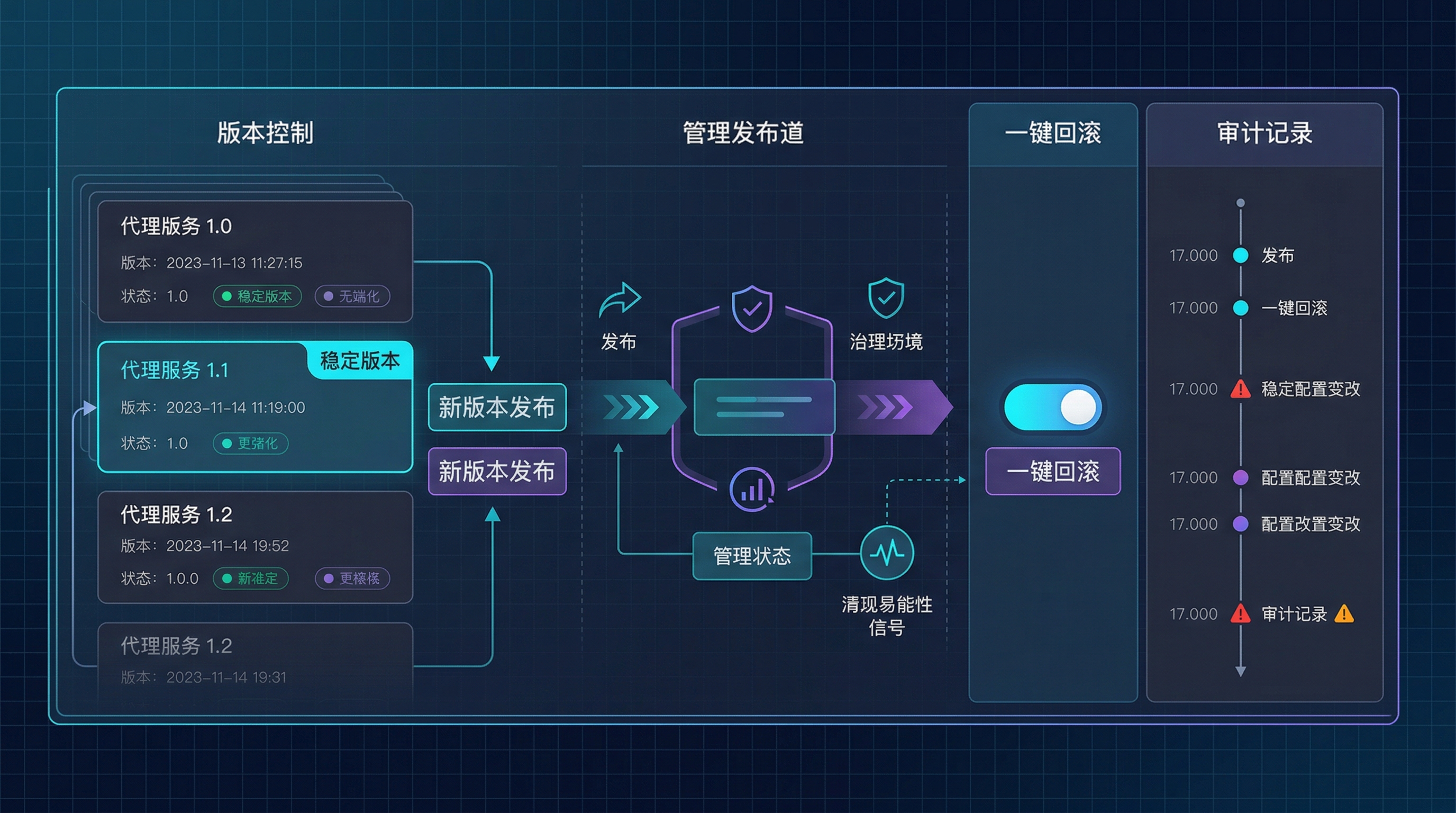
This is the kind of problem engineers know too well: a prompt flow survives last night’s load test without issue, then someone asks for a tiny clarification—just a short edge-case note, nothing major. You tweak two sentences, push it live, and suddenly everything that used to work starts failing.
With the new managed-agents documentation, Anthropic appears to be treating prompts and system instructions more like first-class software artifacts instead of loose strings scattered around the codebase.
- Automated version control: system prompts are no longer anonymous fragments stitched together from who-knows-where. They can be managed as explicit versions with stable identities and lifecycles, like shipping an Agent v1.0.2 rather than crossing your fingers over a text blob.
- One-click hot rollback: if a newly deployed agent starts hallucinating or breaking expected behavior, you do not need a panicked incident response just to restore service. A console action or API switch can route requests back to the last stable version immediately.
That is what serious engineering looks like. Not grand promises for investors, but the slow and necessary work of fitting AI into the governance patterns modern software already depends on.
Splitting the “brain” from the “hands”
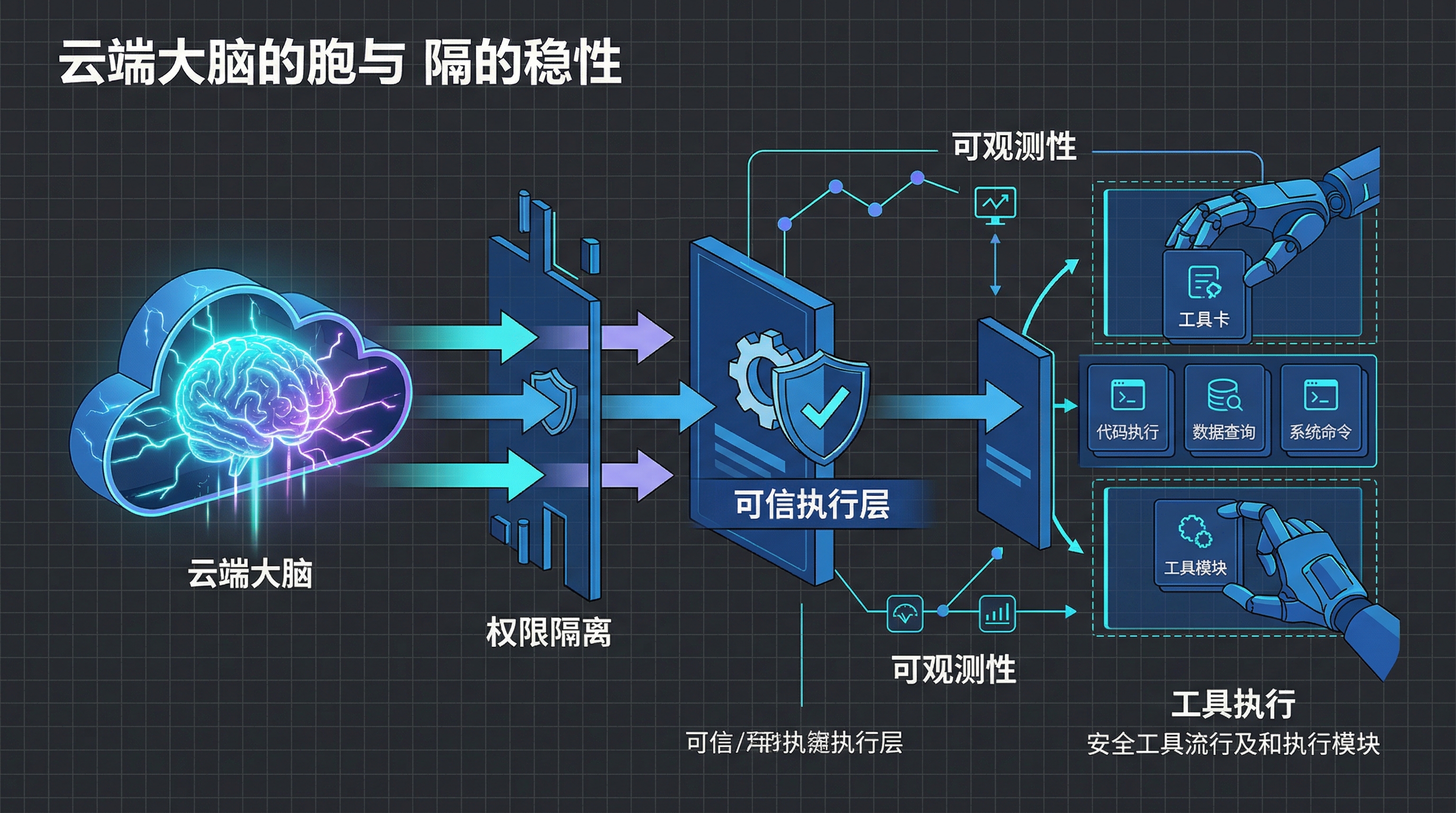
A related engineering post released alongside the beta introduced an architectural idea that deserves attention: the model’s “brain” and the execution “hands” need to be separated.
A lot of agent stacks today still inherit a tightly coupled design from open-source tooling. Model inference and local tool execution are woven together so closely that a network hiccup, a parsing failure, or one bad JSON response can freeze the whole chain.
Anthropic’s answer is to cut through that coupling. The model remains isolated in the cloud and is responsible only for producing a clean action intent. The actual execution step is delegated to standardized, trusted infrastructure. That separation matters because it limits how far the model’s non-deterministic behavior can spill into the application environment.
In other words, the model no longer gets to directly drag your business code around with all its unpredictability. Once permissions are properly isolated, distributing execution across different endpoints or environments also becomes much easier.
Do teams still need to build their own workflows?
That does not automatically mean every team should abandon LangChain or a custom-built workflow stack.
The answer depends on what kind of problem you are solving.
If your goal is frontier experimentation—pushing limits, testing unusual coordination patterns, building something wild like a 16-agent ensemble trying to produce an operating system—then low-level scaffolding still has obvious appeal. Controlling the stack end to end is part of the point.
But if you are responsible for an agent system that serves a hard business function every day—checking credit limits for large customer volumes, handling claims, processing tax refunds—then uptime and fault containment matter more than architectural cleverness. In SLA-driven environments, the most valuable feature is often not flexibility but stability. A vendor-managed system with isolation, pressure resistance, and mature failure handling can be the safer bet by far.
The bigger shift is not the model, but the control layer
This release also exposes something broader about where the industry is heading. The era when a clever prompt trick could headline a conference demo is starting to run out of road.
As the field moves deeper into the next phase, the real battleground may be less about stacking ever-larger parameter counts and more about lifecycle governance infrastructure. Isolation, divergence control, staged rollout, millisecond rollback—these are not glamorous topics, but they are the mechanisms that determine whether agents remain demo theater or become dependable industrial systems.
Only when those boring, rigid, unshowy control layers are built properly does the talk of AI transforming real work start to sound credible.