A few days ago, someone asked about building a commercial mini-program for a service similar to paid gaming companionship. The first idea was not to start from scratch, but to find a suitable open-source project and adapt it.
That approach made sense. Custom development takes time, effort, and money, while the requirements were still far from clear. Building a rough version from an existing project would make it easier to demonstrate the idea and determine what the client actually wanted.
There is an old joke among developers: clients often do not know what they want, but once you build something, they will definitely know what they do not want.
For projects with vague or constantly changing requirements, starting with an existing codebase can be a practical way to turn an abstract request into something concrete.
This time, an open-source project for a gaming companion service seemed to fit the bill. It was downloaded and the deployment process began.
The deployment went smoothly—at first
The project was built with a TP framework. Its client was a web page designed for a public WeChat account rather than a native mini-program. Still, the installation instructions looked straightforward, and the various modules were easy enough to understand. It might at least provide a working prototype that could help reveal the client’s actual needs.
The initial setup was relatively uneventful. The site was created through Bao塔, the source code was uploaded, and the TP pseudo-static rules and Nginx reverse proxy were configured according to the project’s instructions.
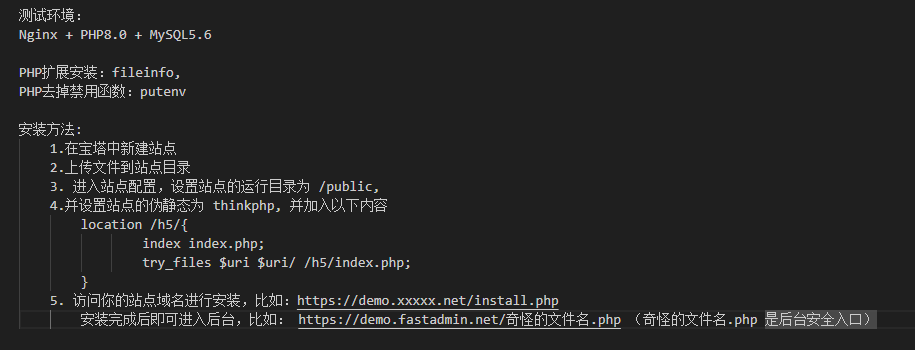
The site domain then opened the installation page, and the installation itself went smoothly. The administration panel was ready soon afterward.
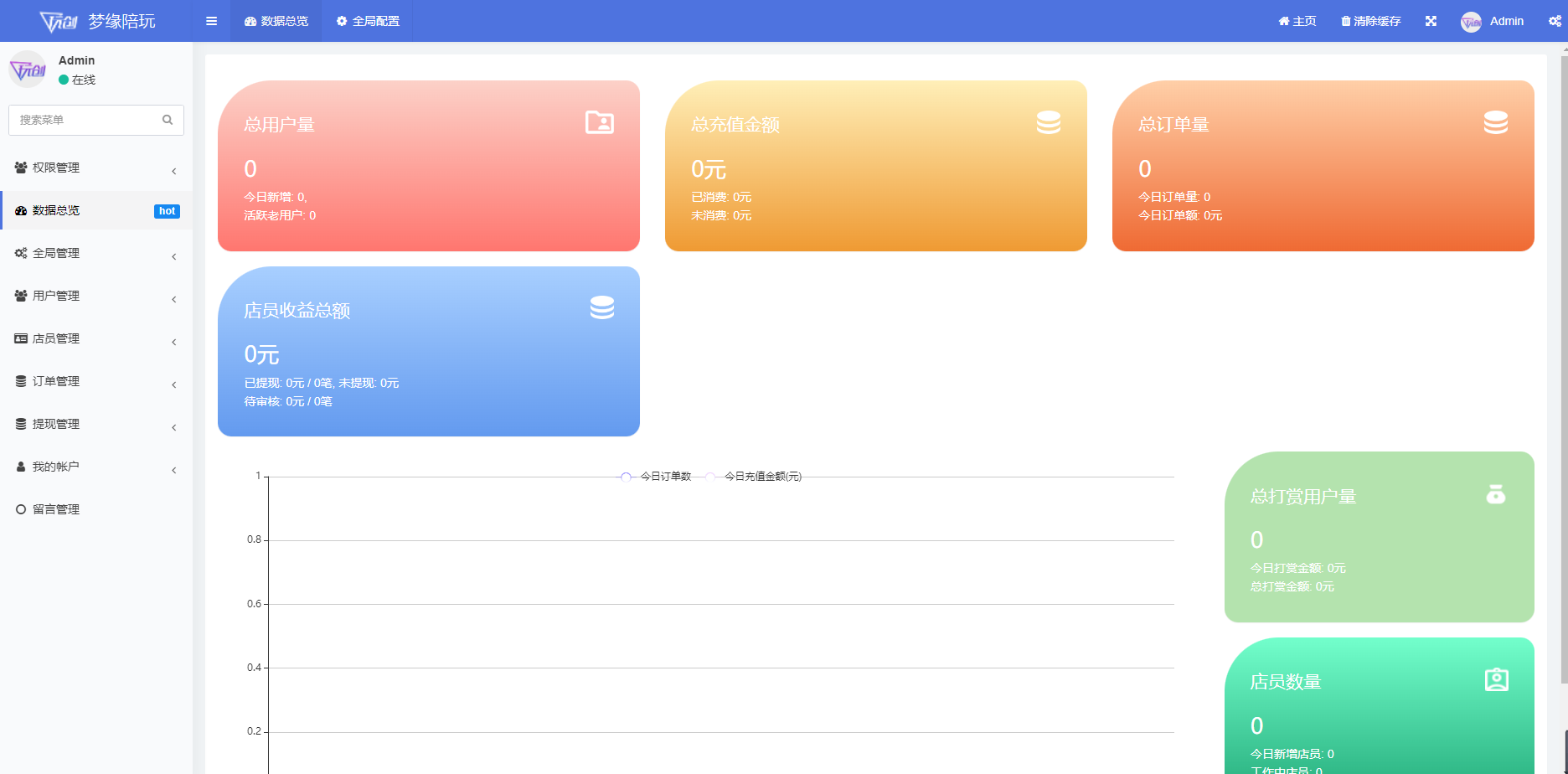
The difficult part came with the client side. Because it relied on a web page running through a public WeChat account, the project required a domain with the necessary filing, an SSL certificate, and configuration of the public account’s app ID and secret in the backend. The developer account also had to be linked, and an IP whitelist had to be configured.
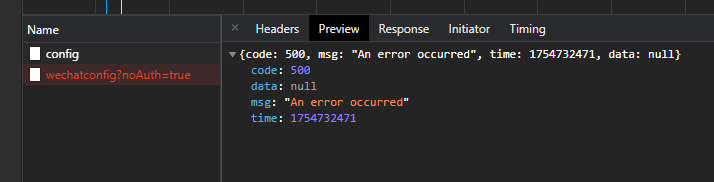
After checking each of these details, the page was finally opened in the developer tools. That was when the expected-but-still-frustrating error appeared.
The source code had its own obstacles
It was hard to accept having reached this stage only to see the project stop running. Giving up was not an option yet. With some familiarity with PHP, the code was inspected manually in an attempt to locate the cause of the failure.

The inspection uncovered an important limitation: the methods responsible for key functionality had been obfuscated and encrypted. They could not be modified.
That was certainly an unexpected surprise. The project did clearly state that it was intended only for learning and technical exchange, with commercial use prohibited. From the author’s perspective, encrypting parts of the source to discourage commercial reuse is understandable. But for someone trying to adapt the project, it also means that the most important parts are effectively untouchable.
A second route was then tried. The server’s error logs in Bao塔 revealed the immediate problem: 已废弃的花括号 {} 访问字符串偏移量. Fortunately, the affected method was not obfuscated, so it could be corrected.
After that change, the project finally had a chance to run again.
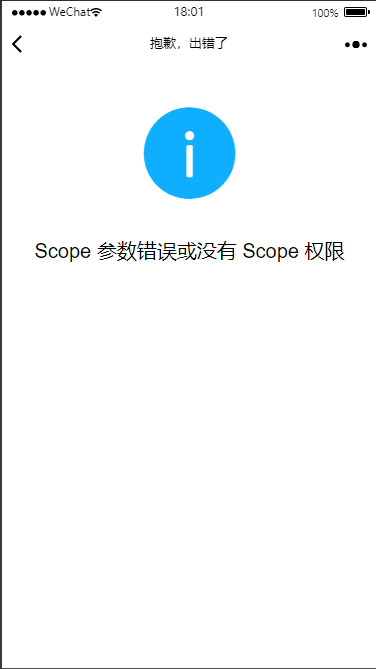
There was still another problem. As noted earlier, the client depended on web-based public-account functionality and therefore needed to call several authorization interfaces. The available account was only a subscription account, which did not have the required interface permissions.
At that point, there was no workaround available.
What “non-commercial use only” can mean in practice
The project never became fully operational, but the failed deployment did reveal several ways in which an open-source project marked “for learning only” may restrict commercial modification.
1. The frontend may be impossible to change
The frontend code was distributed as the compiled output of a framework. The original source was not available in a form that could be edited conveniently, which meant that the client-side behavior could not easily be modified.
2. Key backend functions may also be locked
Important functional methods on the server side had been obfuscated or encrypted. Even if the overall structure of the backend could be understood, the core interface logic could not be changed directly.
3. The backend may contact an external address
Several places in the backend used the file_get_contents method to send requests to a third-party address. It was not possible to confirm the exact purpose of those requests, but their presence raised concerns that the external service might inspect where requests came from or determine whether the code was being used commercially.
There was also a more serious possibility: if the external request returned a particular result, it might be able to interrupt or prevent the backend from continuing to run. Whether or not that behavior was intentional, it is a risk worth taking seriously when deploying unfamiliar code.
An open-source project labeled “not for commercial use” is not necessarily a ready-made foundation for a commercial product. It may be missing permissions, depend on unavailable third-party services, hide critical logic, or include restrictions that only become visible during deployment and modification.
Using such code for study and experimentation is one thing. Turning it into a paid product is another. Before building on it, it is better to understand the license, inspect the dependencies, and respect the effort behind the original work.