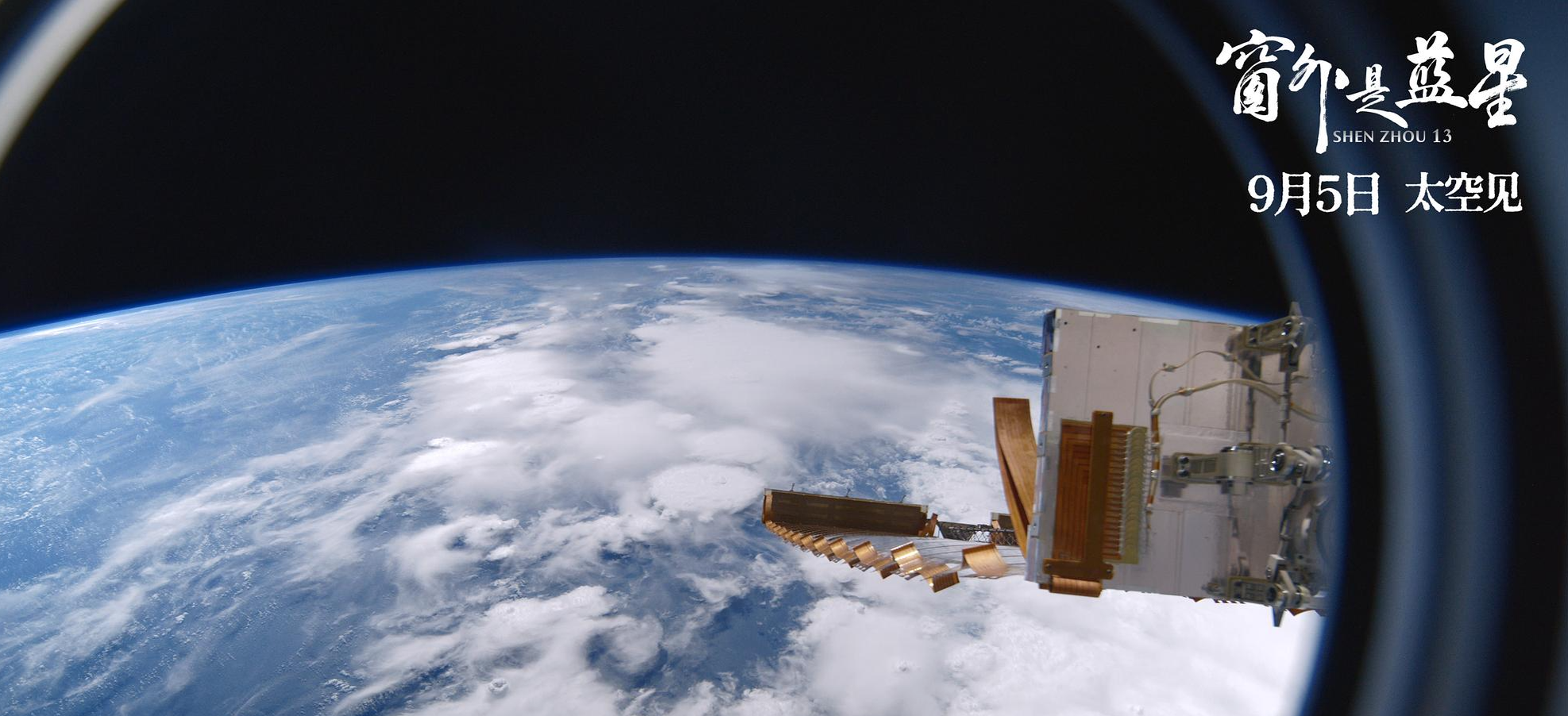
I watched the documentary film Blue Planet Beyond the Window tonight, a film centered on the Chinese Space Station. It is outstanding—assured in a way that feels hard-won rather than forced.
Spoiler warning: this discussion goes into many specific moments from the film.
Before the screening
I got into the theater right around 9 p.m., barely making it in before the main feature started. The moment I walked into the auditorium, I had a bad feeling: the projection equipment seemed terribly outdated. The image was so blurry that even the subtitles were difficult to read, as if the whole thing had been transferred through the visual quality of early Shenzhou-era footage. The room was also full of children, noisy from start to finish.
So yes, I will definitely watch it again under better conditions. Even so, the film itself was strong enough that I could ignore a surprising amount of what was working against it.
I’ve always liked documentaries and documentary films. As a kid I watched plenty of documentary programming, and in theaters I actually haven’t seen that many documentary features. The trailer for this one first caught my attention online, and I had been looking forward to it ever since. By coincidence, it premiered on my birthday. I also came across some online discussion, but deliberately avoided reading too much so I wouldn’t spoil it for myself. One regret is that I haven’t seen some other films shot in space, such as 16 Sunrises.
How the film is built
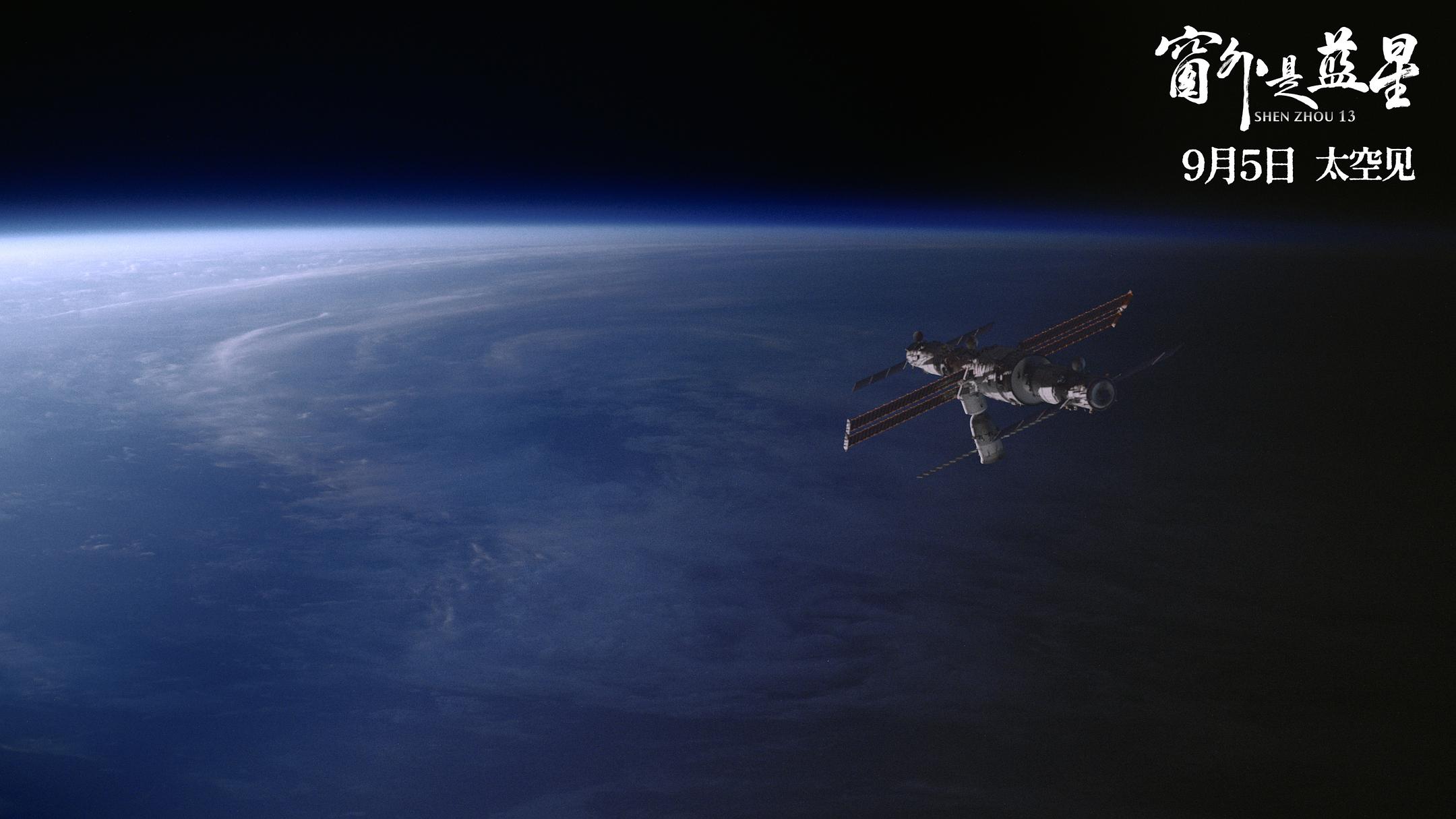
This is a documentary in the most literal sense: its entire focus is the six-month orbital mission of the Shenzhou-13 crew aboard the Chinese Space Station, filmed with an 8K camera that went up to the station for the first time. A documentary, by nature, is anchored in observable reality, and reality is often uneventful. So documentaries don’t always hinge on dramatic twists, and I tend to approach them the way I approach a good slice-of-life series.
But the absence of a tightly manufactured plot does not make this film feel shapeless. Its material is arranged around launch, orientation and introduction, extravehicular activity, daily routines, communication between orbit and ground, views of Earth, and finally the trip home. Each section feels full without being crowded, and the whole film unfolds with patience. Even if I’m recalling the exact order imperfectly, the structure itself is unmistakably thoughtful. It’s the kind of arrangement that suggests a huge amount of labor in sifting through raw footage and deciding what belonged where.
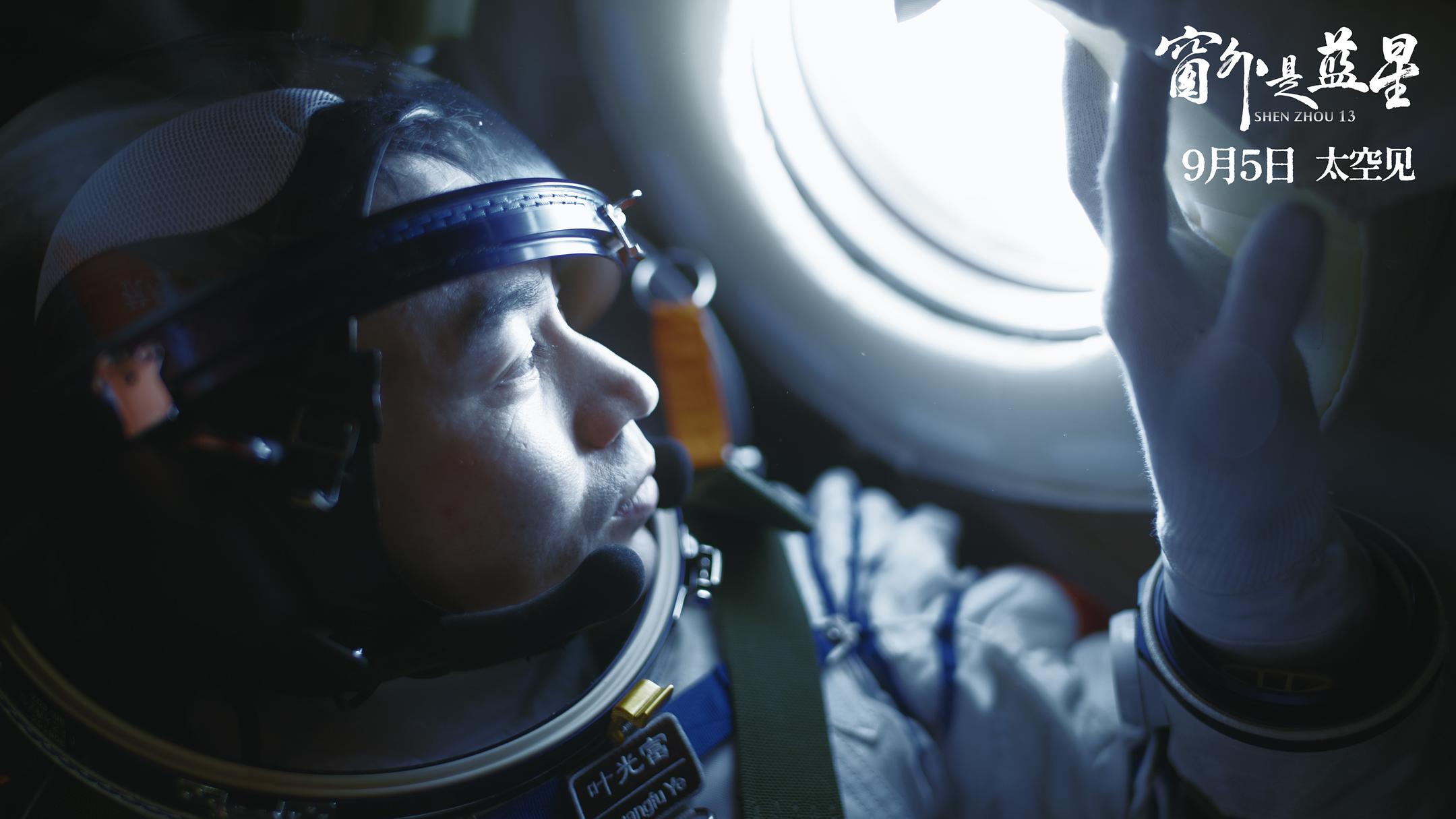
What surprised me most was the level of camera work. I had not expected three astronauts—none of them professional cinematographers, and perhaps not even hobbyist photographers—to produce images this polished. According to the director’s account shared online, the crew only received a single two-hour lesson on how to use the camera before the mission. Yet beyond the basic stability and level framing one would hope for, many shots avoid the ordinary “someone is holding a camera” feeling entirely. The camera often occupies the ideal documentary position: not intrusive, not flashy, simply observant.
And there is genuine design in many of the shots. Static close-ups are used with purpose. Some shots connect to each other with a montage-like logic. The station interiors are given room through empty shots that linger just long enough to create atmosphere. That was one of the film’s great pleasures for me: it matched almost perfectly the kind of space documentary I had imagined in my head.
The film also uses a small amount of CG animation, and it works remarkably well. Not because it aims for the kind of hyper-detailed realism that tries to erase itself, but because it integrates naturally with the live footage, the rhythm, and the film’s way of explaining things. The result feels less like an inserted effects sequence and more like the camera had always been able to occupy that impossible viewpoint. It stands in sharp contrast to the bizarre launch animations that sometimes show up in news broadcasts, or to the kind of overdesigned Hollywood effects work that draws attention away from the subject instead of serving it.
The flow of the film and the way it moves emotionally
A few sequences stayed with me especially strongly.
The beginning, naturally, is the launch of Shenzhou-13. Rocket launches are almost always stirring, even when the shooting itself is not especially inventive. From the pre-launch radio confirmations to ignition, liftoff, and booster separation with the familiar Korolev Cross, these are classic images of human spaceflight. Familiar, yes—but they establish the film’s emotional scale immediately.
Midway through, there is a sequence of close views through the station window, looking down at different landscapes on Earth. It includes scenes from China—the Liaodong Peninsula, the Qinghai-Tibet Plateau, the hills of Fujian—but also other parts of the world: the Andes, the African continent, Hokkaido in Japan. The altitude of the station creates a very particular distance. It is far higher than aerial photography, so the world loses some of its everyday clutter and literalness. But it is also much closer than the distant view of Earth from deep space or the Moon, where the planet can become an abstract blue sphere.
From low Earth orbit, the scale is suspended between the concrete and the planetary. You can see the mirror-like gleam of sunlight over whole swaths of ocean, but you can also see the patterns of cities and farmland spread across the land. It becomes possible to think outward in layers: from our ordinary human reality, to a bird’s-eye perspective, to the station’s selective and majestic view, and then finally to the idea of Earth as a whole.
Wang Yaping’s voiceover in this section is exactly right. It does not overstate the grandeur or insist on telling the viewer what to feel. It lets the audience look. The water shimmers; reflected light reaches toward the celestial palace above. Wind, clouds, distance, satellites, and everything human below all coexist in the same field of vision.
I did not see national borders here. I only saw Earth.
There is also a beautiful stretch near the end built out of empty shots. For most of the film, the three crew members are the clear subjects of the camera. But in the final section, the film deliberately pauses over the station itself—close views of modules now absent of people. Perhaps the astronauts designed these shots consciously, perhaps not, but the effect is memorable. The station, so lively throughout the film, suddenly feels like a home whose owners have just stepped out for a long journey. It also carries a kind of childhood eeriness: the stillness of a house after midnight, when everything has gone quiet and familiar objects have turned slightly mysterious.
The return of Shenzhou-13 is one of the film’s most exhilarating passages. Again, the CG is used carefully and at just the right moments, while the ground tracking footage manages to remain calm and precise without losing force.
The emotional thread involving Wang Yaping and her daughter—the motif of “picking stars”—is clearly the result of narrative shaping by the filmmakers and the astronauts. I do not see that as inappropriate. Documentary has always involved construction, and there are precedents for assembling real material in a way that creates a thematic through-line. Here, that choice works. It gives the film a way to express the bond between astronauts and the people waiting for them on Earth, and Wang Yaping becomes a particularly strong vessel for that connection.
The narration is also performed by Wang Yaping herself. There is some deliberate shaping in the delivery, but not too much. More than anything, the voiceover feels like her own perspective on space life and on the scenery outside the station. It carries a sense of everydayness, but also a sense of confidence.
The film’s emotional core
In the past, in front of the camera, you were always perfect heroes. But this time, neither the director nor the cinematographer will be beside you. You have to film yourselves as living, feeling human beings.
— from the director’s online remarks
That idea gets close to what makes the film work. There is humor in the station—one moment where Ye Guangfu cuts Zhai Zhigang’s hair is especially funny, and it lands better if it isn’t over-explained. There are repeated scenes of the crew video-calling their families. Wang Yaping’s connection with her daughter may be somewhat shaped for the film, but it is effective. There is a very recognizable Chinese sense of family attachment running through these scenes.
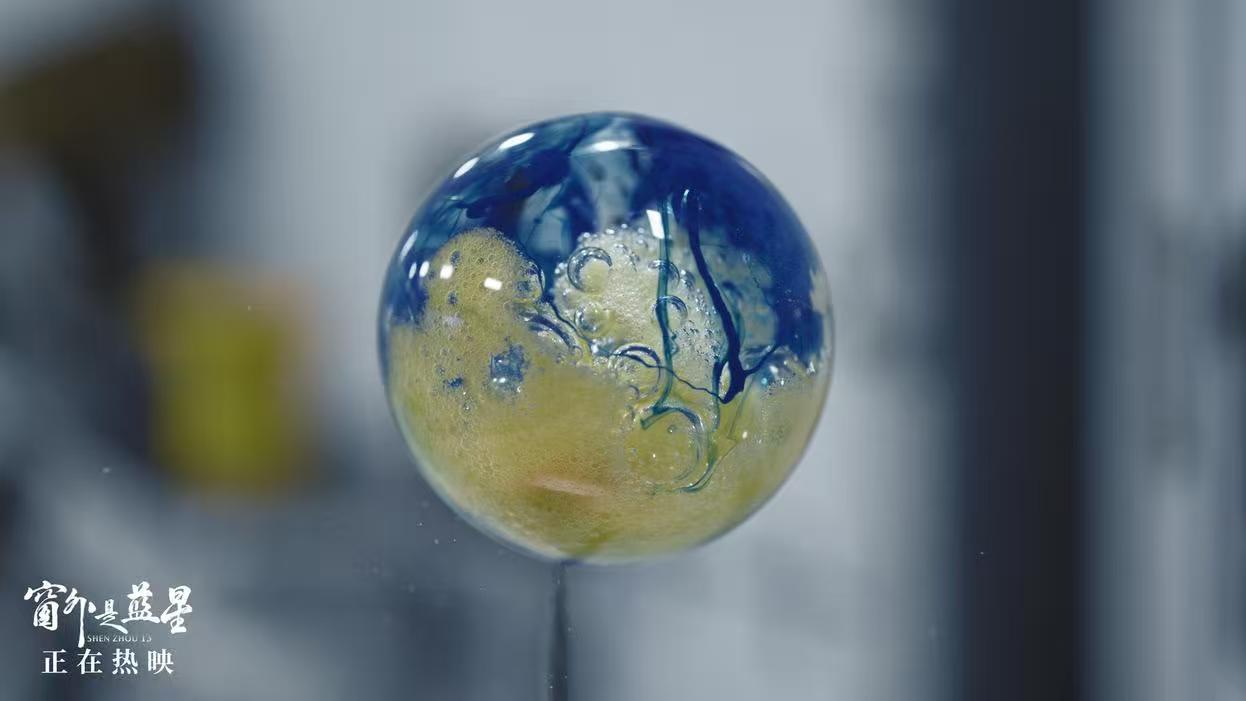
The microgravity routines are fascinating in themselves, and so are the demonstrations connected to the Tiangong classroom sessions, some of which many viewers had already seen live at the time. The film captures a kind of beauty that emerges directly from ordinary work.
At the very end, the film closes with a montage that traces the history of New China’s space program across several decades. I did not expect that choice; the form feels more common in online video culture than in theatrical documentary. The montage itself is not the most dazzling part of the production, but it appears in exactly the right place. By setting historical footage alongside the advanced imagery that came before it, the film makes the progress of China’s space program speak for itself.
A better way to handle “grand narrative”
On our worksite / we put on holiday dress On the front were written eight big characters: self-reliance and striving for strength The movements were like dance, the sounds were like chorus A flawless pairing, seamless as heaven-made craft We dare make Mount Tai turn with a wave of the hand, dare make the sun and moon assume a new sky
The Ten-Thousand-Ton Hydraulic Press
I bring up The Ten-Thousand-Ton Hydraulic Press, a famous comic performance from the 1960s and 1970s, because it points to something important. Traditional grand narrative can absolutely be powerful and stirring. But after decades of repetition, most people have developed a deep fatigue toward its familiar aesthetic. Appeals to “the spirit of dedication” or “the spirit of unity” are no longer received with automatic enthusiasm.
A new era demands beauty. It demands more delicacy, more aesthetic intelligence, and a more refined way of communicating public ideals. If the goal is persuasion or inspiration, then effectiveness is what matters.
This film still carries traces of the older official mode, but it does not stuff itself with slogans or force-feed the audience with declarations of greatness. Instead, it records life aboard the Chinese Space Station. Not in a purely neutral sense, of course; the entire story rests securely on the achievement of Chinese aerospace as its background condition. The film does not need to lecture about systems or mobilization. The labor of an immense collective is reflected everywhere, in the simple fact that this orbiting everyday life exists at all.
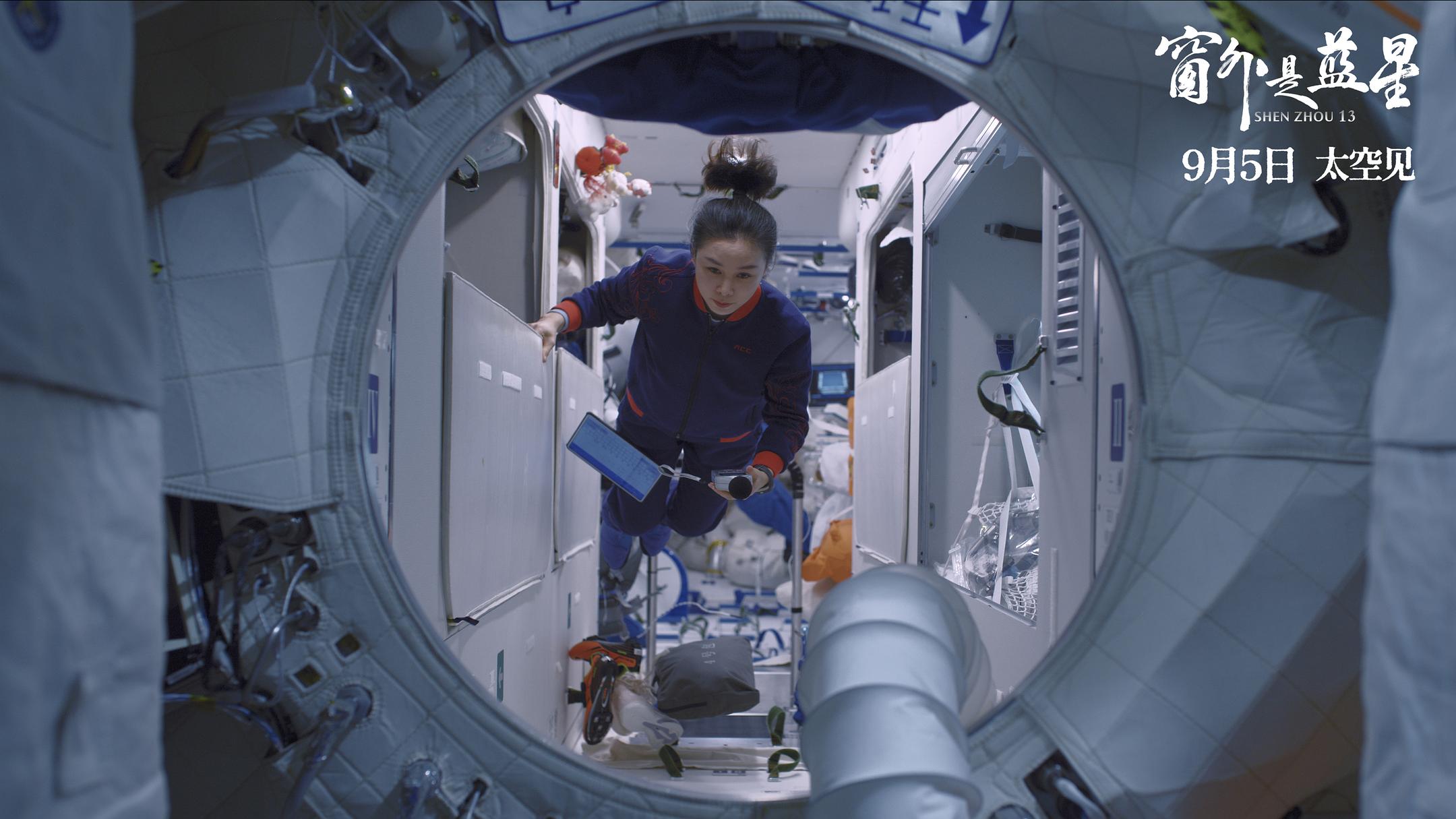
One detail from the director’s online account stayed with me:
About a week later, after I had already given up hope, I suddenly received a reply. They said it could be tried, but it absolutely could not affect safety; everything had to be foolproof. That was wonderful. At the very least, the crewed space program did not reject the idea outright. On the contrary, they felt it could be attempted as long as absolute safety was guaranteed. To this day, I think that was an important moment when Chinese aerospace showed its real confidence.
That confidence is exactly what the film leaves behind. Not a loud confidence, and not a brittle one. Something calmer: the confidence to show daily life, to allow real people to film themselves, and to let the vast achievement in the background remain visible without constantly announcing itself.