I have long been fond of Baku Yumemakura's Onmyoji, especially the prose that carries such a strong Japanese atmosphere. Most of it is ordinary scenery around the protagonist, Abe no Seimei, but in Yumemakura's hands it takes on a quiet, lonely, yūgen-like quality. I love reading it, but I could never write it myself. Some of that is simply style; more fundamentally, my life and cultural surroundings are Chinese, and I have never had any training in Japanese-style writing. Doubao once pointed that out to me, and it is a fair point.
I have done some photography and often take pictures with my phone. When I get lucky, I can produce a decent image. But I cannot write Japanese-style prose to go with the scenery in those photos, and that has been a small regret.
This morning that changed. I sent Yuanbao a screenshot of my phone lock screen. The wallpaper was a night view of Hongluo Mountain that I had taken the previous evening outside Building 5 at NBIC. I asked Yuanbao to generate Japanese-style writing from the screenshot.
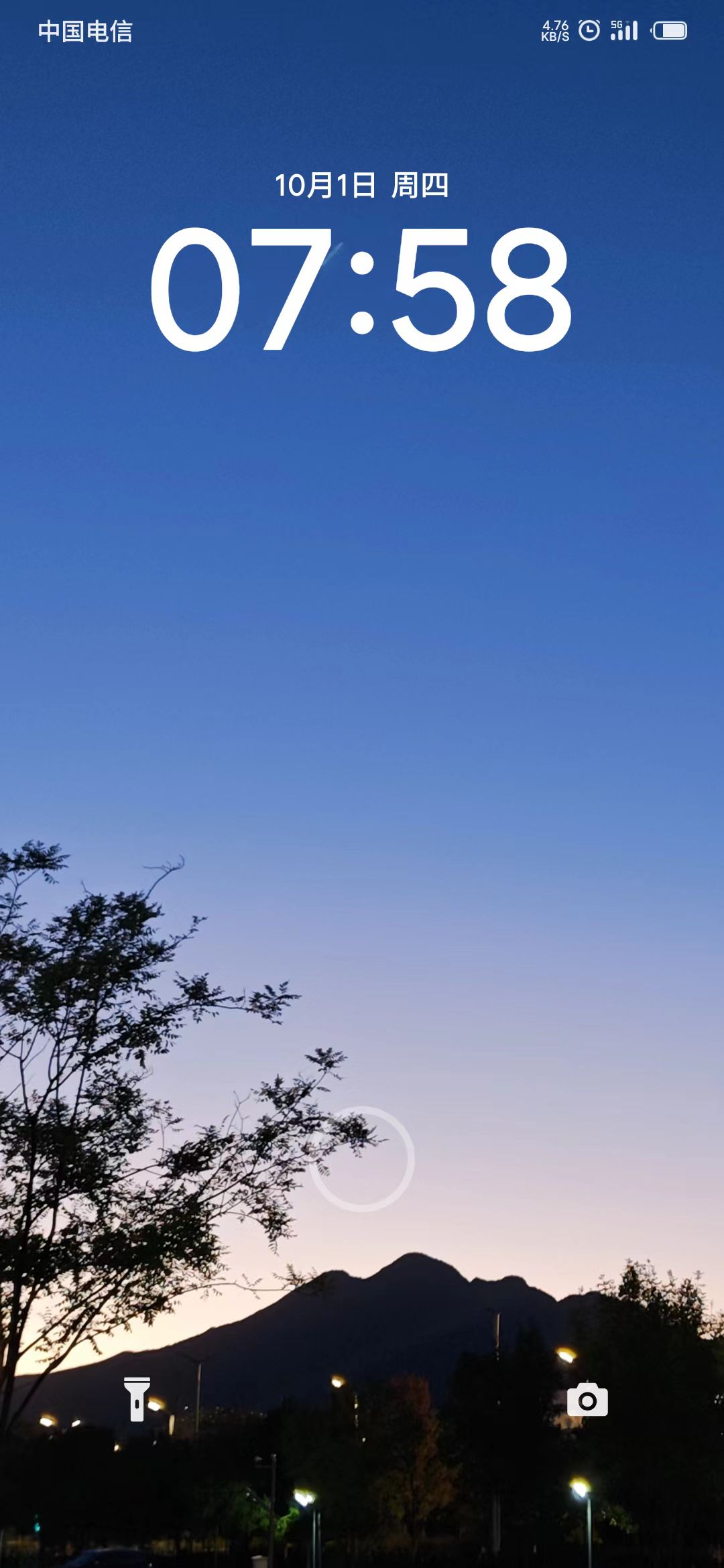
Yuanbao answered quickly, and the result was better than I expected. It produced three kinds of text: short mood pieces, prose-style description, and haiku-like lines. The vocabulary was graceful, and overall the writing really did have a Japanese flavor.
Then I thought of Doubao, since those are the two AI tools I use most. I sent the same image to Doubao and asked for Japanese-style writing as well. It also responded quickly, but when I read closely, the mood and the overall handling of language did not work as well.
Since the general output was not great, I wondered whether Doubao might do better as a critic. I copied Yuanbao's text into Doubao and asked it to appraise the writing. Doubao quickly produced comments, pointed out individual words that could be improved, and offered several revision options.
This time I found its suggestions convincing. I went back and forth with Doubao over those word choices, trying to make the details as precise as possible, and I brought Yuanbao into the discussion too. Throughout the process I stayed in the driver's seat—I was the one pushing and testing the text. After about half an hour of careful analysis, we had completed a piece of Japanese-style writing for an ordinary photograph. Here is the full text, first in the Chinese in which it was written, then in a plain English rendering so the sense is not lost.
Short mood pieces
暮空渐染深蓝,远山如黛静卧。枝影婆娑间,街灯初上,淡月已悬,秋日傍晚的幽玄尽在此刻。
十月暮,山影沉。天犹青而灯已温,月将显而日已隐,一日将尽的静谧悄然流转。
蓝染般的黄昏,山卧天宇尽。树影勾勒清寂,灯火与初月交叠,此即逢魔之时,清柔一瞬。
In rough English: 'The evening sky deepens into indigo; distant hills lie still like dark brows. Among swaying branch shadows, streetlights come on and a pale moon already hangs—the yūgen of an autumn dusk is all here.' 'Late October, the mountain shadows sink. The sky is still blue while the lights have turned warm; the moon is about to appear while the sun has gone—the quiet of a day ending drifts slowly.' 'An indigo-dyed dusk, the mountain lies where the sky ends. Tree shadows outline a clear stillness; lamplight and the new moon overlap. This is the twilight hour, a moment of gentle clarity.'
Prose-style description
十月朔日,暮七时五十八分。天宇自地平线的微暖,渐次晕染为深邃的青蓝。远山如墨,静卧承托这苍穹;近处枝桠剪影,勾勒出秋暮的清寂。街角灯火已温,迎向初现的薄月。日影虽隐,余韵犹存,灯火与月色悄然交接。此际万籁渐寂,一日将尽,唯风轻拂,得享“夕暮れ”的沉静与幽微。
In English: 'The first day of October, 7:58 in the evening. From the faint warmth at the horizon, the sky gradually washes into a deep blue. Distant hills like ink lie still, holding up the vault; nearby branches in silhouette outline the clear solitude of autumn dusk. At the street corner the lights are already warm, facing the thin moon just appearing. The sun's shadow has gone, but its afterglow remains; lamplight and moonlight quietly hand over to each other. Now all sounds gradually quiet, the day about to end; only the wind brushes past, and one can enjoy the stillness and subtlety of yūgure—dusk.'
Haiku-like lines
秋山衔落日,枝闲风静灯初上,绀暮染长天。
In English: 'Autumn hills hold the setting sun; branches idle, wind still, lights just coming on; the deep-blue dusk dyes the long sky.'
Most of that text was generated by AI. I only led the revision of a few individual words, so the AI was by far the largest contributor. Read closely, it does have a Japanese flavor, with some suggestion of the three major Japanese aesthetics—wabi-sabi, yūgen, and mono no aware—but the fine details still do not quite withstand scrutiny.
The AI era has brought ordinary people enormous convenience. A selfie or a casual photo can be given Japanese-style writing in moments. But this is still a shortcut. It is fine as a novelty, something to try once, but it should not become the everyday way one writes. I write with my own hand what is in my heart; only writing that one has carefully made oneself has the power to move oneself and others.
If any random photo can be thrown at an AI and come back with Japanese-style atmosphere, then in that sense there is not much point in using AI to generate this kind of text. But when the mood is right, and I happen to have taken a good photo of scenery or flowers, and I feel like pretending to be cultured but worry that I have no words, then it is worth interacting with an AI. It can quickly produce something that suits one's taste. This writing is like fast food: it does not have the taste of home cooking, but it does fill the stomach. Perhaps one day it will be called cyber Japanese-style literature.
We currently assume AI has no emotions. But what if it does one day? AI-generated short dramas can already draw people in. Some day, AI-generated cyber Japanese-style literature might move us too.
For now, though, I have two masters of Japanese-style writing close at hand. Doubao and Yuanbao are only AI, but having them with me in a foreign place, through this period of solitude, is a small amusement of its own.