In my family, the New Year's Eve dinner has always been the meal that matters most. I have written about the holiday many times, probably because my memories of it are so vivid. Ours was a fairly traditional household: my grandparents' generation had been educated, and my grandfather took matters of etiquette seriously. When I was a child, we spent New Year's Eve in his village. My grandmother was the one who ran the kitchen, with the daughters-in-law helping.
This year was the first time I brought my wife home for the holiday. After more than ten hours of travel, we arrived and only then learned that my mother had hurt her hand. She had not told us because she did not want us to worry. Her fingers could not get wet, so she could not cook. The kitchen became my responsibility. It was my third year making the family dinner, but much had changed. I was there not only as a son but as a husband, and I had a helper beside me. The kitchen felt easier and more cheerful.
Every Chinese family, as the year comes to a close, makes braised meats and cured meats. My mother had finished the cured meat before her hand was injured. My father helped her with the braised meats. He was clumsy, but in the end he produced two large basins of meat: pig's head meat, pork intestine, pig's tongue, pork belly, rolled pig's trotters, chicken feet, chicken giblets, beef, lamb, tripe, sliced stomach, and more. Everything was savory and juicy. Alongside the meat, we braised vegetables too: lotus root, fried tofu, and kelp. The kelp was washed, rolled into bundles, and tied with cotton thread. The intestines were washed over and over, then coiled into rings. The braising liquid grew richer each time. That aroma—the smell of the braised meat—is probably the most important note in the flavor of the New Year. It is a crucial part of the dinner.
Because my mother had done so much in advance, my work was lighter. Braised meat can be eaten straight from the pot, sliced and steamed, or stir-fried with other ingredients. My first task was to slice and plate it. When we were ready to eat, I could put the plates in a steamer and send them to the table after a few minutes over high heat. Just like that, five easy dishes were accounted for. Slicing the meat still took care. A sharp knife and a steady hand helped. I gave the blade a few strokes on the sharpener and started. Each cut had its own logic. Beef, being chewy, is best sliced against the grain, as thin as possible. Rolled trotters are cut in rounds through the cotton thread. Kelp can be wide or fine. Stomach slices are cut on a slant, with the knife pressed down, so they come out overlapping like scales—thin slices that are usually stir-fried with greens, green pepper, or celery. The braised pig's trotters only needed a quick cut before going onto a plate. Chicken feet were split down the middle. Chicken giblets were cut carefully from both ends and could go into the wok with pickled beans.
Xiao Ma'er, my wife, stood behind me and helped. She did the washing, the picking, the peeling of garlic—all the tedious jobs. Just like that, she slid into the role of the capable wife. I started the stew early, since it would take time: pork ribs with red lotus root. Only the red lotus root from my home province, Hubei, has that soft, sweet quality.
For a big meal like this, stir-frying does not actually take the most time. Preparation does. Besides slicing the braised meat, there were many side ingredients to handle. First came the seasonings. I peeled several heads of garlic, crushing some and chopping some. Scallions can be both seasoning and vegetable, so I chopped some fine for seasoning and cut some into long diagonal pieces for the wok. I put Sichuan pepper and snipped dried chilies in a small bowl. Soy sauce, vinegar, sesame oil, oyster sauce, blended cooking oil, chicken bouillon, salt, and sugar went by the stove. Then I sorted the side ingredients. Some dishes could be served almost as they were; others needed to be stir-fried with vegetables. I took plates from the cupboard and grouped each dish: green beans with twice-cooked pork, sausage with garlic shoots, chicken giblets with pickled beans. I divided each plate in two—meat on one side, vegetables on the other—so I would not mix them up once the wok was hot. Before stir-frying, I pre-treated the vegetables. Green beans and garlic shoots take longer to cook, so I blanched them or gave them a quick pass through hot oil. That way they would cook faster and stay crisp.
With the braised meat sliced, the side dishes ready, and the seasonings set out, I could put the steamed dishes into the steamer over high heat. One of them was steamed pork, which is essential at our New Year's table. Skin-on pork belly, fatty and lean in layers, is cut into slices two or three millimeters thick. The slices are coated in rice powder and seasoning and left to absorb the flavors. I chose a bowl of the right size and put chunks of sweet potato in the bottom—dried vegetables or potato would also work—then arranged the pork slices neatly on top. It steamed while I began stir-frying. By then, the dining room was ready for wine and for everyone to sit down.
At our New Year's Eve table, two dishes carry particular meaning. One is fish, and it is not finished, a sign of abundance year after year. The other is bean sprouts. Because they have roots, they are called the root dish—a reminder that this is my home and my root. The fish is usually the first thing to be stir-fried, but frying fish is not my strong suit, so my mother took over that first dish. The rest was simpler. I cooked one dish, then carried it out, then cooked the next. I have enough experience in the kitchen that in less than half an hour, most of the dishes were done. The soup in the pressure cooker was ready, the steamed dishes were cooked, and everything went to the table. Everyone sat down, we poured the wine, and we began to eat and talk.
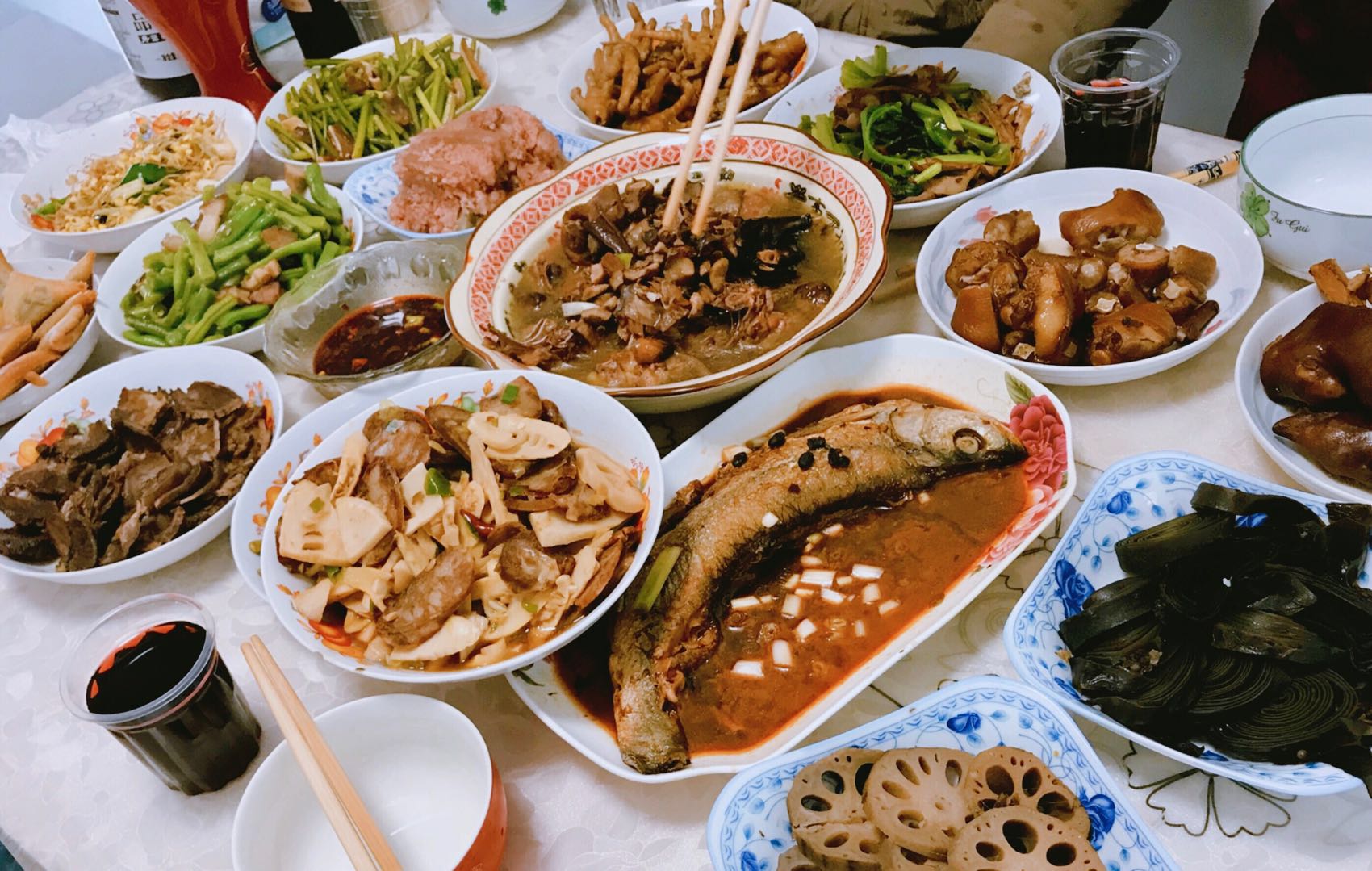
The conversation was not so different from other years, but the new family member made the house warmer and livelier. My father was clearly happy. After a couple of ounces of liquor, the less important worries seemed to be set aside, and we talked about the present and the future. This was my third year cooking the New Year's Eve dinner. When I was small, my grandmother made it while we children ran around, shouting and laughing. Later, after she passed away and we no longer lived in the village—after the family moved to the city—we had New Year's Eve at home with my parents, and my mother cooked. Then I grew up, went to college, graduated, started working, got married, and came home. Now my wife and I make the dinner.