The office was still full a little before ten. This was not the chatty, bantering atmosphere I knew from previous companies. People sat with their heads down in front of computers; meetings kept rolling into more meetings. I could not tell whether no one had left because I had not entered the rhythm yet or because this was simply normal. Either way, I could not last. I slipped out.
One thing at a time
The first rule of technical writing is almost embarrassingly plain: make the article single-threaded. A single-line structure means one article says one thing, in linear order, from shallow to deep, step by step, plainly and cumulatively. In practice I keep trying to write something simple and single-threaded and it swells anyway. Too many things get stuffed into one piece; I do not know where to begin, and nothing feels complete.
Memos over slides
Bezos's argument about why documents beat PowerPoint feels like the upstream source of ByteDance's document-heavy culture, but copying the form without the substance does not work.
- PowerPoint is designed to persuade. It is a sales tool. Inside a company, what you want is truth, not a business leader's pitch.
- The weakness of slides is that they are relatively easy for the author and hard for the audience to grasp the main points. A memo is the opposite. You may spend two weeks on a first draft, then rewrite, keep working it, make sure the language is accurate and reliable. The audience can read for half an hour and understand the context and how well the author knows the problem.
- During a slide presentation, the speaker may decide on the spot to hide or change certain points. A memo does not have that problem. The speaker has to give a complete description in advance, so you can see his real thinking more clearly.
Platforms and personality tests
Someone offered a deliberately provocative observation: after Weibo's largest shareholder became SMG, the three most toxic internet companies in China were all Shanghai companies, namely Weibo, Bilibili, and Xiaohongshu. The claim was that Shanghai internet companies had a near-monopoly on spreading Chinese online ideology, encouraging extremism, opportunism, and refined selfishness, and that we should wait and see how the Z generation produced by these companies ends up striking a comprador city like Shanghai. The take is highly subjective. Still, sometimes the comments under Bilibili videos and Xiaohongshu posts really do raise my blood pressure. There are also claims that short-video algorithms damage the brain. The world is noisy; what it all becomes is something we can only wait and see.
MBTI has become the world's most popular personality test. It turns up in Korean variety shows, Chinese social media, and Western memes. I have always felt it is like astrology, just conversation material. When a meeting risks awkward silence, people need something easy to identify with and basically meaningless. Everyone does the questions, discusses the results, and two hours are gone.
Shanghai
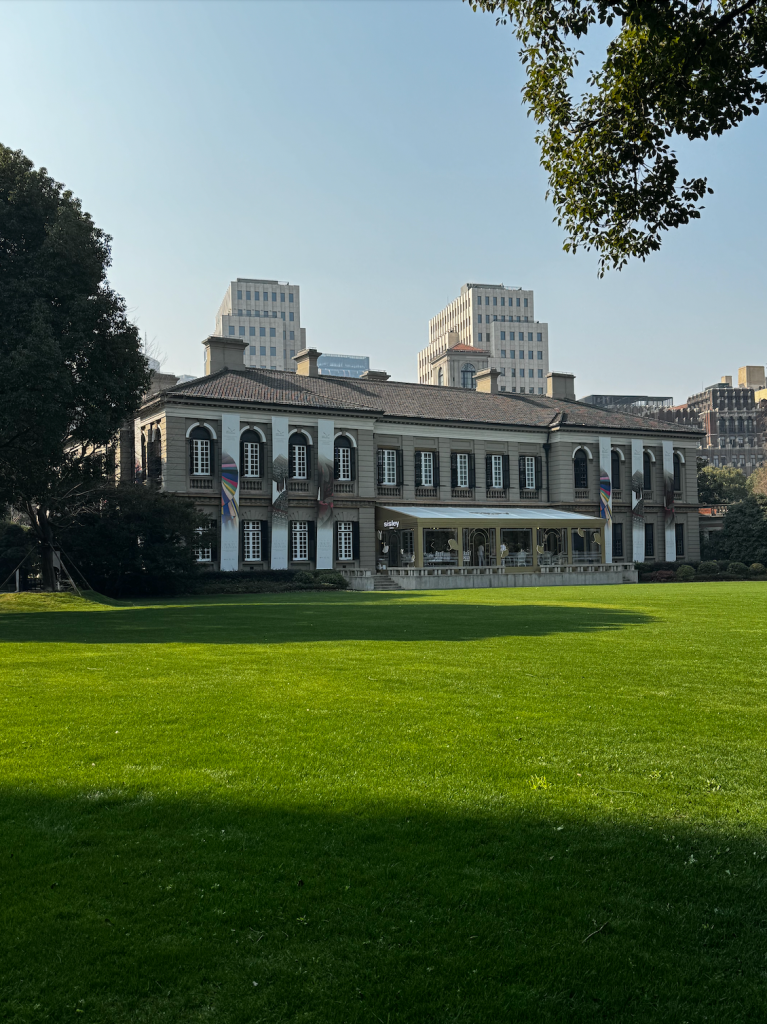
A friend was staying in a hotel converted from an authentic YMCA building. The YMCA is an old youth organization, and the building next to New World is over ninety years old; its last renovation seems to have been around 2008. Inside, the decoration unmistakably belonged to the last century, a bit like the old state-run feeling of Shanghai Science and Technology Cinema when I went during the film festival last year.
Then we walked to Bund Origin for Rongji 95, a bistro under Xin Rong Ji. The menu focused on Taizhou-style small seafood. In Taizhou I had eaten sand garlic with bean noodles; in Shanghai it became eel with bean noodles, which was hard to accept. It tasted worse than in Taizhou, but overall it was not bad. My friend said Sichuan cuisine could not build a high-end boutique brand the way Xin Rong Ji has. Everyone is just making money; no one is trying to develop the cuisine as a tradition. Is that not a miniature of cultural development now? After dinner we walked from Bund Origin around Suzhou River and Waibaidu Bridge, past the Peninsula Hotel. The Bund architecture looks a little different every time.
Shenzhen
I had not been to Shenzhen for a long time. The last visit may have been five years ago, interviewing at Tencent and hoping to move from Shanghai to headquarters. I got an offer but chose another company. When I got off the plane I was wearing a coat. Walking the streets, whether because of the warm weather or the Nanshan style, no one else wore a coat; I felt out of place. People wore down jackets, short sleeves, hoodies. Shenzhen winter dressing seems impossible to agree on.
I read in the car and did not pay much attention outside, so I do not know what Shenzhen looks like now. It is hard to compare because previous impressions are blurred. Still in Nanshan, near Shenzhen University and close to Tencent's Binhai Building, but years ago when I visited I mostly circled Kexing Science Park. The first time I stayed at Sentosa Hotel I thought Tencent's benefits were really good. The current company's office is in one of Shenzhen's top ten supertall skyscrapers, about fifty-something floors. I do not know whether it is the building design or company rules, but to reach the fiftieth floor you first go to B1 and then transfer at the thirtieth-something floor. A large office building does not just mean queuing for elevators; it means transferring twice. Commuting is hard. Back in Shenzhen after all these years, the hotel air conditioning still has no warm air.
What I read and watched
Melbourne's composure
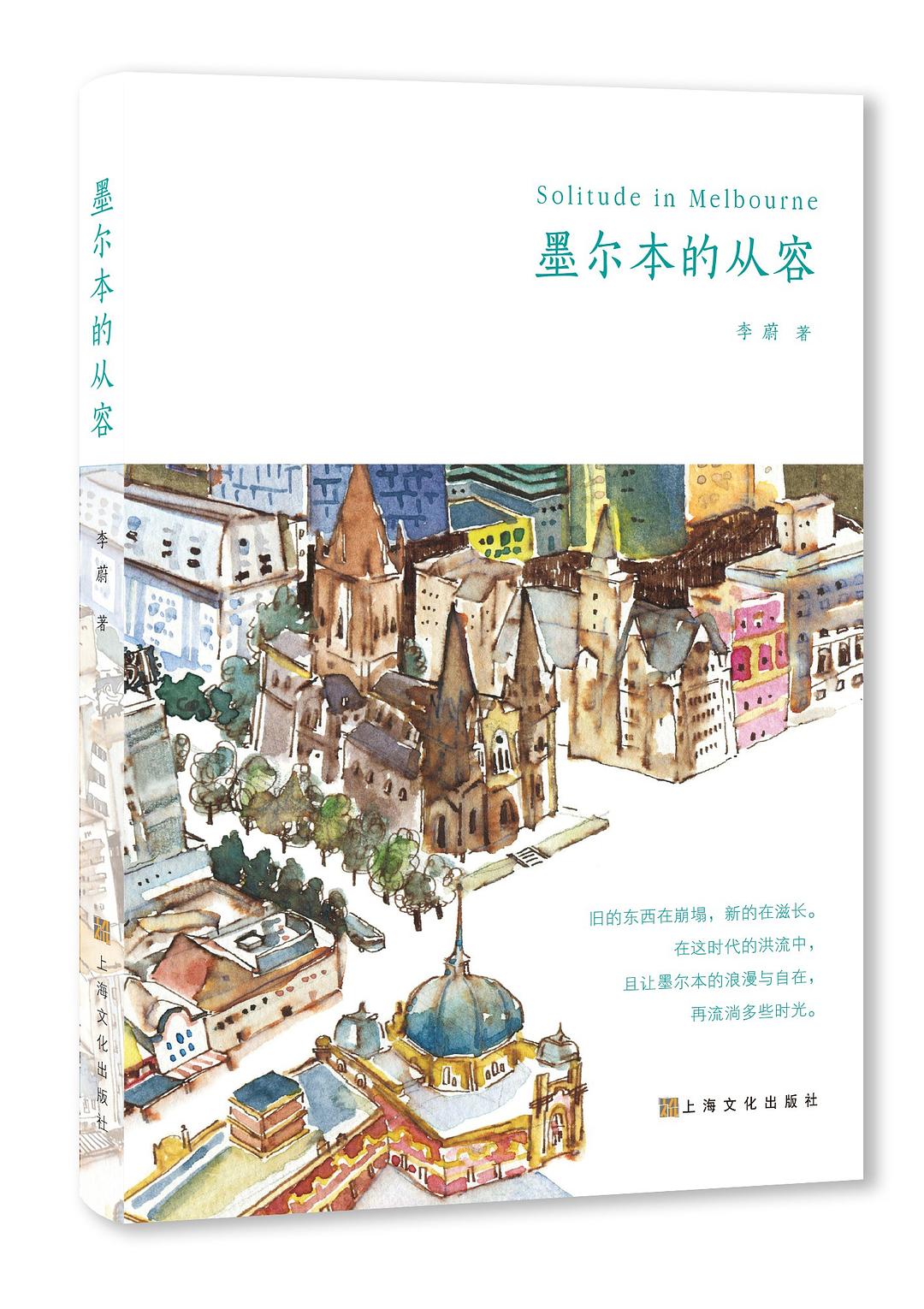
Marked 2024-02-01 12:41:59. Rating: 8.
This was travel prep. Some interesting points: Aesop and Lonely Planet are both brands born in Australia. While reading, I felt this was an Australia visible only to people of a certain class and status. It does not have the skill of Spanish Travel Notes, but it is still worth reading. In the author's words, it combines a deep examination of a city's culture, heartfelt love, and even a worry about its future. She begins with an Australian painter she saw as a teenager. Some details: Melbourne is named after a British prime minister; Australia's capital is neither Melbourne nor Sydney but Canberra; Cate Blanchett is an Australian actor; Aesop and Lonely Planet are Australian-born brands. The author's online bio is indeed elite: Li Wei, born in Beijing, graduated from Peking University's English and American Literature Department, and holds an MBA with distinction from the University of Wales. She is currently Asia-Pacific general manager of Destination Canada; previously director of Asia development for Tourism Australia and international marketing manager for Tourism Victoria, responsible for marketing and strategy in China, Asia, Europe, and the US. She has lived in Singapore, Hong Kong, Shanghai, Sydney, and Melbourne, and has won international awards for advertising creativity and campaigns.
A debate about true love
I recently watched a 2v2 philosophy debate: Liang Qiuyang and Ma Weiwei versus Zhan Qingyun and Pang Ying, on whether true love is a lie. At first, when Ma Weiwei spoke, I had no idea what she was talking about. Later I felt they were arguing on different dimensions, not opposite sides of one question. At first I sided with the negative. As I slowly understood, the affirmative said there is only love and not-love, no 'true love'; the negative said there is true love, false love, and love. Then I found myself on the affirmative side. Discussing it with people, I realized I have very strong fixed ideas. In some debates I plant myself at one angle and find it hard to understand others. I have become a stubborn middle-aged person. That is not good.
evermore
It has been a long time since I watched Taylor Swift: The Eras Tour, but I keep looping All Too Well and Champagne Problems, and I am still resentful that exile was not performed. A piece called Long Time No See, Taylor Swift wrote that the show ran over three hours and Taylor sang more than forty songs. To prepare for the near-marathon, she quit alcohol, learned dance, and began physical training six months in advance. 'Every day I ran on the treadmill and sang the whole set out loud,' she told Time. As I had guessed, confidence and maturity need exercise.
OKRs in dreams
I listened to a podcast. The information density was so-so, but the title really made you click. Apparently the big-company narrative and escape-the-big-company narrative will become a series. In Shenzhen I felt a certain atmosphere: living on Lark, grinding documents every day, always OKR. I want to go back to Shanghai.