
A simple way to describe MVC is this: separate the outside from the inside, then connect them with a structured data pipeline.
After learning the MVC software architecture, it is hard not to wonder whether this way of thinking can also be used beyond programming—especially in everyday planning, collaboration, and even problem-solving.
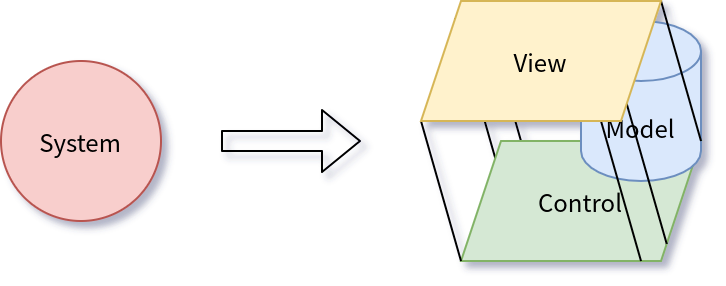
From an outside observer’s perspective, MVC can be understood like this:
- View focuses on interaction. It handles input from the outside and displays output.
- Controller focuses on processing data, including things like calculation and storage.
- Model focuses on the format of data. It packages the information passed between the interface and the business logic.
- The purpose of MVC is to separate the View from the Controller, while using the Model to organize and carry data between them.
- Because responsibilities are divided clearly, maintenance becomes easier and adding new features is more manageable.
Once that basic structure is clear, it becomes interesting to look at MVC from the program’s point of view instead of the observer’s.
Imagine two main characters: little V, little C, and a box called M.
Little V is outgoing and loves interacting with people. V shows all kinds of interesting things to others and also receives many gifts in return. After that, V places those gifts into box M according to the order marked on the box, then sends it to little C.
Little C is the technical one. C likes taking apart the contents of box M, combining them, reorganizing them, and processing them. When finished, C puts the result back into a box M—it may even be a different box M—and sends it back to V.
V and C are good partners, and they help each other get things done.
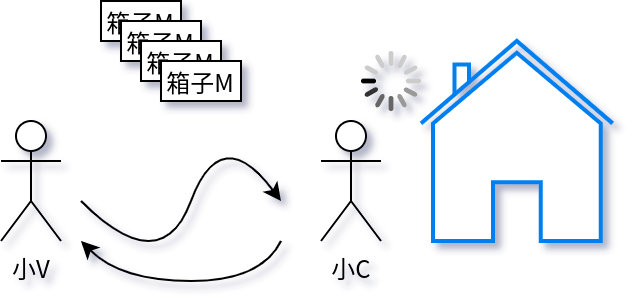
In this small story, the box M—the data model—plays a very specific role: it standardizes how data is passed around. It helps little V, the interface side, and little C, the business-logic side, exchange their “gifts,” which are really just data.
There is also a clear split in responsibilities. V faces outward and handles communication. C faces inward and handles the actual work. Aside from calling each other when needed, their main connection is the use of these structured boxes. That creates a strong but orderly relationship.
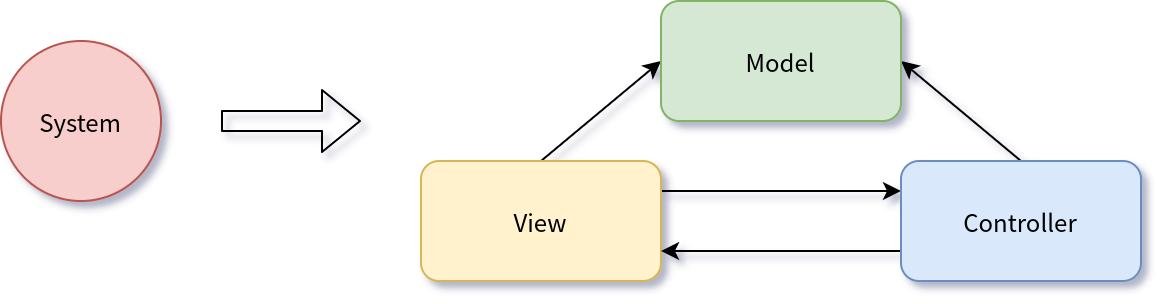
This kind of pattern shows up in everyday life more often than it may seem.
Take a small team, for example. A team leader is responsible for coordination and external communication. Team members are responsible for carrying out specific tasks. The communication between them often happens through standardized forms: application sheets, reports, task notices, and similar documents.
In that setting, the team leader is the View, the team members act as the Controller, and the many documents flying around are the Model. It is, in a very practical sense, an MVC structure.
So how can this way of thinking actually be used in daily life?
At its core, MVC is still a framework—a template for solving problems. What it suggests is that when designing a solution, it helps to split visible, surface-level logic from the hidden logic working behind the scenes, and then connect those two parts in an orderly way.
That is different from the stream-of-consciousness approach of jumping straight into an answer the moment a problem appears. Borrowing the MVC mindset can reduce complexity and make it easier to design a path toward a solution.
In other words, MVC is not only useful for building software. It is also a reminder that many messy situations become easier to handle once interaction, execution, and the data connecting them are clearly separated.